

Mount Analogue
Michelangelo Antonioni and Luigi Ghirri
15.11.2025 – 15.02.2026
Curator: Frederic Montornès
Opening: Friday 14 November, 7 pm
Mount Analogue is an exhibition conceived as an unfinished visual essay whose incompletion, far from responding to a misfortune or accidental circumstance, responds to a desire to explore the artistic practices of Michelangelo Antonioni (Ferrara, 1912 – Rome, 2007) and Luigi Ghirri (Scandiano, 1943 – Roncocesi, 1992), based on the infinite affinities arising between the former’s cinematographic and the latter’s photographic production. It is a catalogue of common, serene and imperceptible analogies, approximations and gestures that characterise the way in which both artists reflected on the part of existence of being that occurs at the fringes of the gaze, expresses itself in silence and seeks to bridge some of its voids. A way of being, existing and acting in this world of which the exhibition only shows the tip of the iceberg. Or the summit of a mountain. Or, better yet, the representation of the summit of an idea of mountain.
Born 31 years apart in two different cities in the same northern Italian region separated by a road of about 100 kilometres and with an average mountain height of no more than 500 metres, Antonioni and Ghirri are two artists who, despite never having met, forged their gazes on the plains, were educated in sight by broad concentrations of alluvium and rivers and sketched out their formal and conceptual horizons by freely moving across that misty area where thought and imagination run.
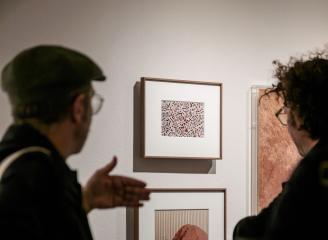
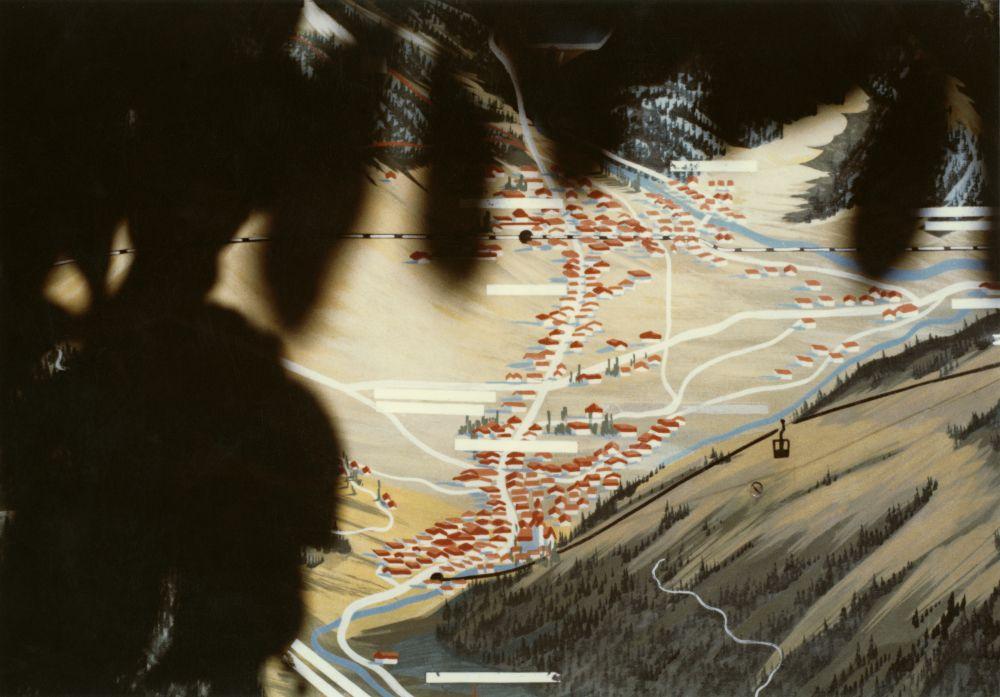
Based on a selection of no more than forty images from Antonioni’s Enchanted Mountains series, which appeared on his work table under his watchful eye in the 1960s, and Ghirri’s early work, produced during the 1970s on his trips through the Po Valley seeking out what was happening beyond a fleeting gaze, the exhibition begins with an investigation born of intuition, traverses the orography of a premonition, embraces the idea of a mountain and shares what has been perceived within the walls of a single space. It represents a pause along the way in order to remain, from there, in a state of “desiring”, always awaiting something.



With the collaboration of: