Barcelona Metròpolis celebrates World Capital of Architecture
The latest issue of the City Council’s ideas magazine is dedicated to Barcelona’s role as the 2026 World Capital of Architecture and features a special Observatory entitled ‘Architectures for Life ’. Nine experts offer wide-ranging perspectives on the present and future of architecture in Barcelona.
Barcelona Metròpolis has seized the opportunity to mark Barcelona’s year as the 2026 World Capital of Architecture. The magazine celebrates the occasion with an issue devoted entirely to the subject, approached through the thoughtful, reflective perspective that has become the hallmark of this Barcelona City Council publication. Carmen Rodríguez Pedret, Caterina Figuerola, Dolors Clavell, Josep Maria Borrell Bru, Ramon Bosch and Bet Capdeferro, Guim Costa Calsamiglia, Eulàlia Gómez Escoda and Pau de Solà-Morales explore the impact of Barcelona’s architecture around the world and the immense challenges that lie ahead. ‘Barcelona has earned a privileged position that is also a challenge: to become a forum for debating the challenges of the future’, writes the magazine’s editor, Milagros Pérez Oliva, in her editorial.
The first contribution comes from Carmen Rodríguez Pedret, a member of the Scientific Committee for Barcelona 2026 World Capital of Architecture, who sees the event as an opportunity ‘to strengthen the connection between architecture and citizens and to reflect on how we communicate it’.
Combating social isolation, rebuilding social ties and supporting everyday life are the priorities put forward by architect Caterina Figuerola, who argues that ‘we need to rethink the city as a relational infrastructure in which public space, housing, renaturalised landscapes and community facilities help create stronger neighbourhoods, improve health and reinforce the social fabric’.
Meanwhile, lawyer Dolors Clavell examines active management tools that can help tackle gentrification in the city, including special levies. ‘The aim is to prevent the displacement caused by the property market when an urban area becomes attractive’.
Josep Maria Borrell Bru, Director of IMPSOL, argues that ‘the current housing model may be reaching its limits, but that also presents an opportunity: to rethink the entire model from the ground up, questioning not only how many homes we build or how much they cost but also the value they create’.
Architects Ramon Bosch and Bet Capdeferro focus on the paradigm shift taking place in residential architecture. They call for greater flexibility in living spaces, free from rigid hierarchies and designed for multiple uses, making better use of available floor space and taking a fresh look at existing resources.
Guim Costa Calsamiglia, meanwhile, champions the role of architects, noting that they ‘are expected to meet far more demanding requirements than a few decades ago, while also carrying ever greater legal responsibility’. He adds that ‘defending the role of architects means defending the quality of our homes, public facilities, streets and the city itself’.
Eulàlia Gómez Escoda, Director of the Barcelona School of Architecture (ETSAB-UPC), reflects on the institution’s future challenges. ‘We must continue to serve as a space for critical reflection on the social, political and economic transformations that continually reshape the city and the wider region’, she says.
The Observatory concludes with architect Pau de Solà-Morales, who looks back over 125 years of architectural awards in Barcelona, highlighting the creation of the FAD Awards in 1958. ‘An award is a two-way journey: the winning projects and careers become benchmarks for others to follow’, he concludes.
Alongside the ‘Architectures for Life’ Observatory, Barcelona Metròpolis also features Gregori Civera’s photographic essay ‘Barcelona Under Construction’, which takes readers on a tour of some of the projects currently under way across the city, as well as a feature on the transformation of party walls into façades, one of the lasting legacies that the World Capital of Architecture programme will leave to Barcelona.
More content
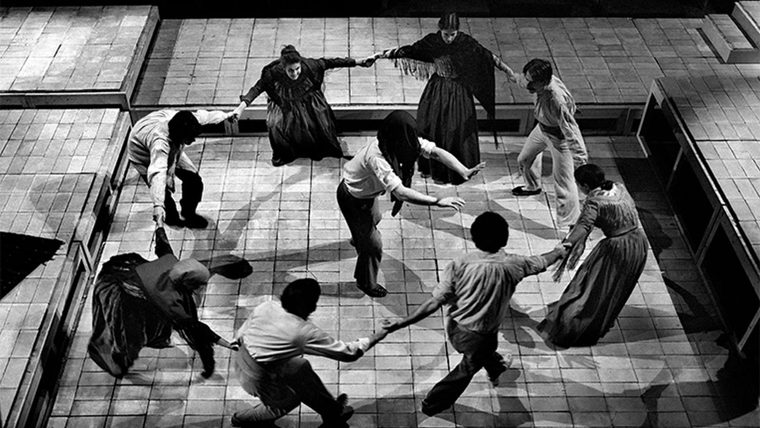
Issue 139 also includes interviews with Remedios Zafra and Josep Maria Pou; features on the new La Sagrera neighbourhood and the 50th anniversaries of Teatre Lliure and the Grec Festival; a debate on ‘how to uphold a culture of peace in a world at war’; a short story by Joan Todó; and a selection of recommended books and exhibitions.
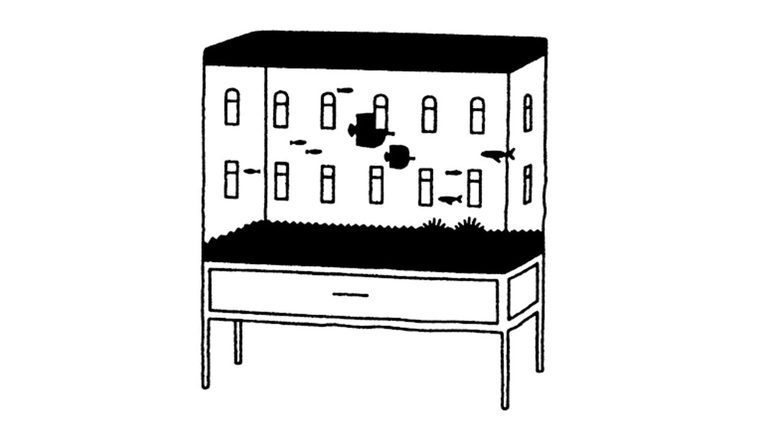
The illustrations in this issue are by Pablo Amargo, and the cover photograph is by Gregori Civera.