Solidarity in a world in flames
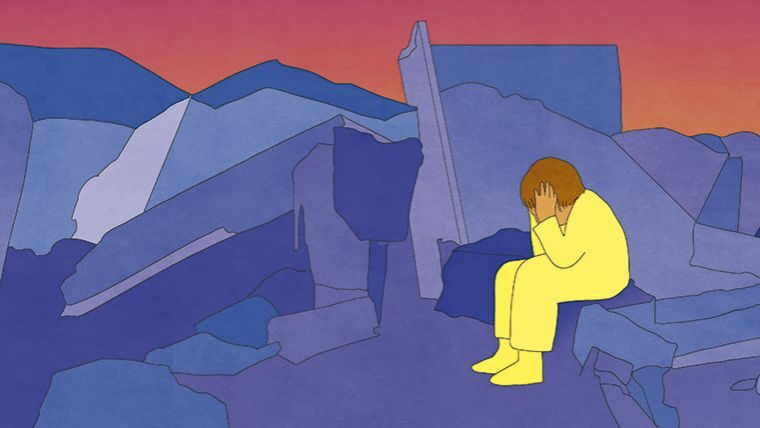
Consolidated after the Second World War as a system for resolving conflicts and avoiding the repetition of the great wars and humanitarian catastrophes of the 20th century, the world order is being eroded and making way for a new model based on the law of force. The Barcelona Metròpolis dossier “Solidarity in a world in flames” analyses this new scenario, where solidarity is more necessary than ever.
Consolidated after the Second World War as a system for resolving conflicts and avoiding the repetition of the great wars and humanitarian catastrophes of the 20th century, the world order is being eroded and making way for a new model based on the law of force. The Barcelona Metròpolis dossier “Solidarity in a world in flames” analyses this new scenario, where solidarity is more necessary than ever.
The conflict in Gaza, in all its complexity, has become a mirror reflecting the political shortcomings in the reaction to injustice, as well as an example of how civil society can find intervention mechanisms that force public powers to act. Barcelona Metròpolis analyses this new global scenario through some outstanding experts: Máriam Martínez-Bascuñán, Victoria Camps, Moussa Bourekba, Carme Colomina, Mathias Delori, Patricia Simón and Manel Vila. The editorial Solidarity in crisis, by the magazine’s director Milagros Pérez Oliva, warns that “there is no multilateral total dismantling of the world order, but its operational capacity is being taken away, threatening to turn it into a useless carcass”.
The dossier opens with Máriam Martínez-Bascuñán, author of the book El fin del mundo común: Hannah Arendt y la posverdad, which affirms that “much vaunted solidarity appears unable to turn into effective political action”. In her article, the author affirms that authentic solidarity does not demand an immediate return or symmetry: “The other owes us nothing, as this is not a transaction”.
Victoria Camps, a full professor in Philosophy at the University of Barcelona, analyses the shift in values that affect modernity, where solidarity has been displaced by individualism and other values with more consideration, such as liberty and equality. “Placing the obligation of advancing towards a fairer society exclusively on state institutions is an error”, she notes.
In the article “From normative strength to strength as the norm: lessons from Gaza”, Moussa Bourekba, a researcher with the CIDOB, denounces the double standard applied by US and the EU in the wars of Ukraine and Gaza. “The international order has been blown up from within, its credibility destroyed and disaffection fuelled”.
For her part, the journalist and researcher Carme Colomina emphasises that “the EU’s redistribution mechanisms are conceived transitionally, based on the interests of member states and not as an exercise in solidarity”.
The French political scientist Mathias Delori, author of the book Ce que vaut une vie [What’s a life worth?], takes a look at war materials and explains the obscure parameters that determine the military calculation of collateral damage. “The rules have been twisted to the point where the civilian population has once again become unprotected”, he concludes.
The journalist Patricia Simón wonders what lessons have been learnt from the global movement against the genocide in Gaza, calling out how solidarity has been criminalised in consolidated western democracies such as the USA, Germany and the UK. “It should come as no surprise to us that part of society concludes that getting organised to exercise solidarity is of no use”, she affirms.
The dossier ends with Manel Vila, who was the manager of the District 11 Sarajevo initiative, an example of solidarity from the last century, and now heads the Advisory Committee for District 11 – Cities of Palestine. Vila is convinced that “the future of the world points towards cities, linked to reciprocal duties in solidarity”.
Interviews with Rosa Romà and Victoria Szpunberg
Rosa Romà, chair of the Catalan Audiovisual Media Corporation, talks about the future of television as we know it today, and how it can adapt its formats and content with a view to the future. Interviewed by Àlex Gutiérrez, she complains that with the fall in advertising revenue, the media have had to “get resources whichever way possible. And that has favoured clickbait and subtle promotion”.
The other protagonist in this issue is the playwright Victoria Szpunberg, winner of the National Drama Award. She lays bare her personality before the questions of Marta García Miranda, confessing “many years of monotonous and demanding activity, working invisibly and, let’s be honest, accumulating resent”.
In the section Urban visions, two interesting reports bring us to the complex configuration of today’s Barcelona and one of the main headaches for its population: housing. Clara Blanchar explains how the city could be free of all its tourist lets by 2028, including those with legal licenses. And Gerard Pruna looks at the whole process leading to a new city neighbourhood starting life, taking La Marina del Prat Vermell as an example.
The Barcelona in figures for this issue is also devoted to housing and sets out historical data offering a better understanding of it: the evolution of construction, officially protected housing, sales, average prices, the rental market, the impact of controlled pricing, seasonal rents, empty homes… A good snapshot of a constant evolution.
The writer Rebecca Solnit is the protagonist of the section In Transit, by Eudald Espluga. The two of them had the chance to talk at an event organised by the CCCB, which led to this interesting portrait of a person “hopefully exhausted”. Solnit affirms that the world changes “thanks to patient people”.
In the Culture Section, the Debate centres on the importance of the humanities when it comes to developing critical thought. Conducted by Jordi Nopca, nine experts discuss the dangers of a world increasingly driven by efficiency and utilitarianism and putting reading aside. For his part, Agustí Argelich looks at the large volume of festivals specialising in short films that are held in Barcelona and Catalonia.
In the book section, Julià Guillamon pays homage to Lluís Permanyer, “a wise and generous man”, who left us just before the publication of his latest book Testimonis de tot el món sobre Barcelona. Edició molt ampliada d’una monumental documentació de vint segles. For his part, Àlex Tort reviews La paraula vencedora de la mort, by Rob Riemen. The exhibition pages are devoted to Chez Matisse. El llegat d’una nova pintura, a display on at the CaixaForum Barcelona from 27 March.
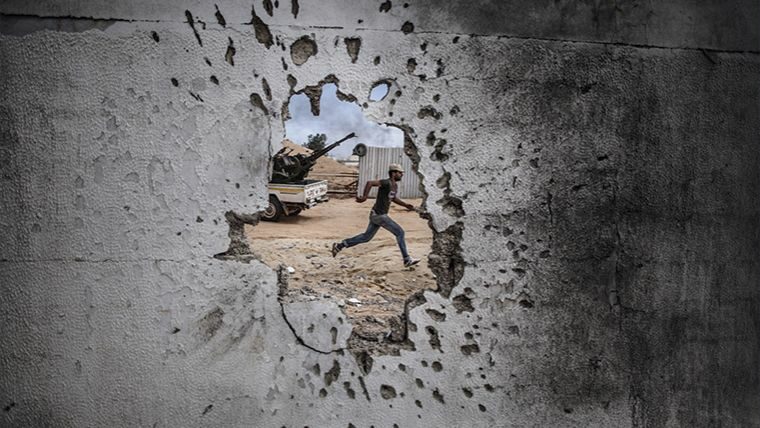
The magazine rounds off with the story Love is a closed market, by Roser Vernet. The illustrations for this narrative, the cover and the dossier are by María Medem, while the protagonist for the photographic insert is the graphic reporter Manu Brabo, Pulitzer Prize 2013, who has documented wars, uprisings, migration crises and natural disasters. His hard-hitting work “Wars Elsewhere” adds an element of reflection to the dossier for this edition, devoted to solidarity.