
History
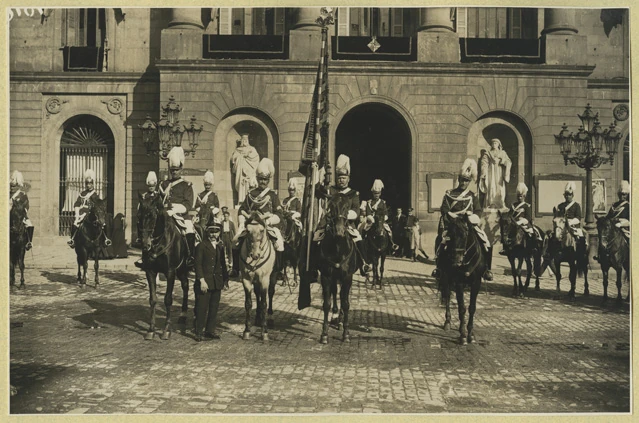
Old photo of the Urban Guard on horseback, swearing an oath to the flag
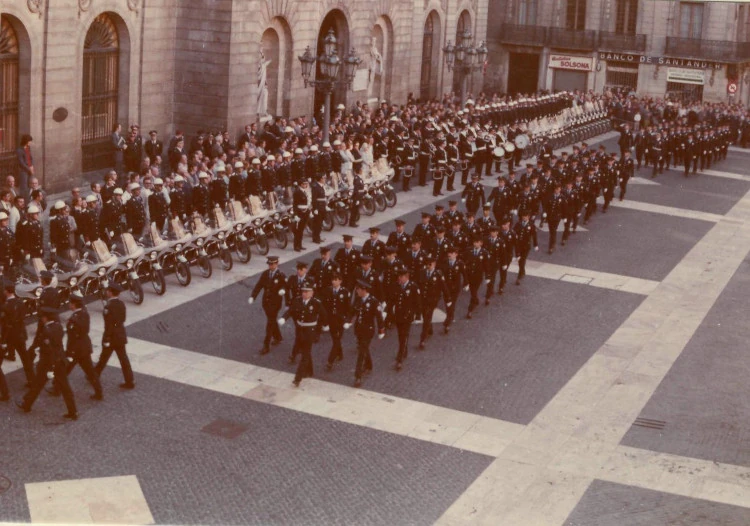
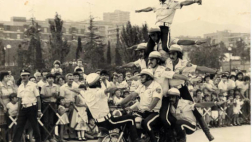
Urban Guard parade, old photo
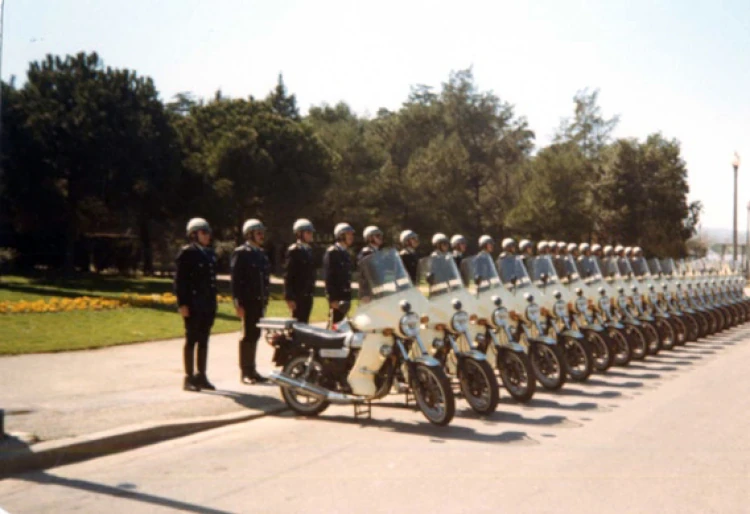
Old photo of the Urban Guard with a motorcycle
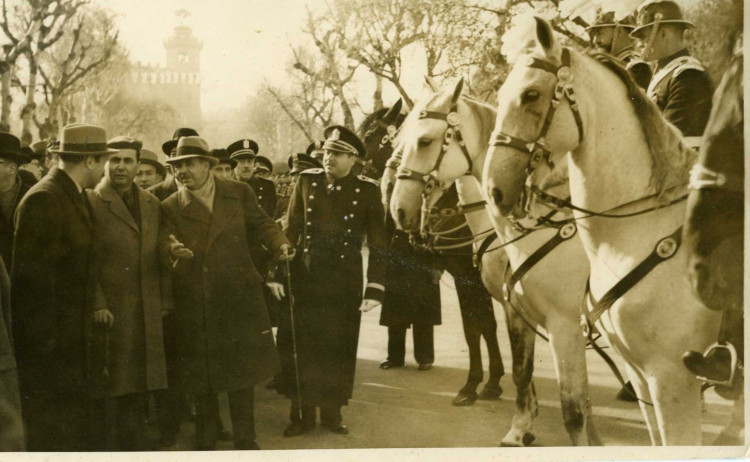 The Guàrdia Urbana city police was founded in 1907. Initially, it focussed on road traffic and mobility.
Over time, its responsibilities expanded to also guarantee all other areas of social harmony.
The agency has stepped up its local-outreach and coordination with other municipal services and police forces. One example is the Joint Command Room of the Guàrdia Urbana, Fire Brigade and Mossos d’Esquadra (Catalan police).
In the 21st century, new technologies have been permanently incorporated, while the new concept of prevention and security has made unprecedented progress.
Summary of the GUB’s history
-
The Municipal Guard was created in 1843. Its regulations indicated that one of its missions was to defend and maintain peace in neighbourhoods.
-
In 1907, the Guàrdia Urbana was created to address the traffic problems caused by the city’s growth and to take on the responsibilities of civic police.
In 1921, the municipal and urban guards were combined into a single agency. In 1929, this agency passed its first major test: the International Exhibition of Barcelona and Montjuïc Park.
In 1938, the City Council published the first Visual Traffic Regulations, which presented safety policies to the general public.
In 1941, the Guàrdia Urbana underwent a complete overhaul. The role of the neighbourhood guards was introduced, inspired by London bobbies.
-
The structure of the GUB developed in an environment where cars were increasingly important.
Its responsibilities were readjusted to focus more on traffic management and enforcement and include responding to traffic accidents and attending to victims as part of its help and assistance duties.
In 1953, the Escola de la Guàrdia Urbana was created to prepare future officers for any social changes, as well as for the constant increase in traffic.
In 1957, the municipal patrol service was created, a pioneering service for patrolling the streets, responding to accidents and recovering stolen vehicles, among other responsibilities.
Traffic management was developed: in 1959, for the first time, a coordinated traffic light management system was set up on a city street, and in 1968, the first traffic control room with a light panel was opened..
-
Period associated with the process of political change and the development of the rule of law. Priority was placed on public service conceived from city residents’ perspective, the groundwork for the modernisation of the GUB was laid and modernisation of services took off.
The main objectives were public safety, environmental quality and the conditions of public roads, in addition to overseeing traffic.
In 1979, the first women graduated.
Gradually, other responsibilities were incorporated and public assistance services became more accessible.
In 1995, a new era began with the community policing project, which embraced local policing and co-responsibility with the public, with a particular focus on prevention and problem solving.
In 1996, the computerisation of services began. Notably, the Command Centre was completely overhauled with the roll-out of the Mycelium project, which saw the integration of the former 092 units, the Information Service and the Switching Matrix.
-
Over the course of 2003, the GPS-based fleet management system was consolidated.
In the summer of 2003, the GUB collaborated for the first time with the Mossos d’Esquadra and the Spanish Police Force as part of the Universal Forum of Cultures.
In 2005, it evolved towards a new model of local policing with the creation of the Joint Command Room of the GUB, Fire Brigade and Mossos d’Esquadra.
The force also underwent a major modernisation process with the arrival of PDAs and the TETRA communication system, which allowed direct communication between the GUB and the Mossos d’Esquadra.
The GUB was awarded the Spanish prize for the best strategic internal communication policy for its internal communication project that it started in 2005.
-
The GUB’s operations are aimed at addressing new social issues and offering a fully local policing service.
In 2007, the first local units came into operation: Ciutat Vella, Sants-Montjuïc and Sant Martí. The GUB also earned ISO9001:2000 quality certification.
In 2008, a new system for processing complaints and proceedings was launched through the complaints handling offices (ORD). The new service handles public complaints in which the perpetrator of the crime is unknown or cannot be identified: theft, damage, vehicle theft or complaints involving the loss of an identity document.
In 2010, Barcelona witnessed one of its largest prevention and security operations for the visit of Pope Benedict XVI. For the past 10 years, the Accident Unit has set the benchmark for local police forces throughout Spain in the field of assistance, management and prevention of traffic accidents.
In 2011, the new operational base for the Security and Traffic divisions was opened. The same year, the Women’s Committee was created, with a view to promoting the recruitment of women into the GUB’s operational structure. The year ended with the incorporation of laptops in cars as a complement to the PDAs.
In 2012, Operation Xarxa was launched, with a view to preventing crime on the metro.
In 2013, a new system was launched to immediately show whether a vehicle had passed its roadworthiness test.
Major changes were made to the collaboration and coordination between the GUB and the Mossos d’Esquadra, facilitating the later integration of the Guàrdia Urbana into the “112” emergency system. In 2015, the first headquarters shared with the Mossos was opened in La Barceloneta, where the Beach Unit is also located
-
In 2016, the Guardia Urbana Master Plan was developed to detect areas for improvement in the service provided to the public and adapt the agency to the city’s demands and needs.
The Ethics and Internal Affairs Unit was created, as a result of the expansion of the Internal Affairs Unit’s responsibilities, which went from an essentially disciplinary model to a broader one that included ethics and best practices to be able to take preventive action.
In 2017, work began to roll out the Neighbourhood Police, a new work model for the GUB that involved the creation of a team of neighbourhood police in each district. The aim was to learn more about the institutions, facilities and residents in each neighbourhood with a view to detecting problems early and staying a step ahead. The Neighbourhood Police was first deployed in 2017, with teams in Nou Barris, and the expansion was completed in 2019 with the deployment of the team in Sarrià - Sant Gervasi.
Cronograma
1843
Creation of the Guàrdia Municipal
1907
Creation of the Guàrdia Urbana de Barcelona
1929
GUB section at the Barcelona International Exposition
1941
Establishment of the neighbourhood GUB
1953
Creation of the Escola de la Guàrdia Urbana [GUB School]
1968
Creation of the Centralised Traffic-Control Room
1979
First recruitment campaign including women
1992
GUB helps manage security at the Olympics
1995
Pilot community police programme is launched in Sant Martí
1996
GUB services are computerised (Project Mycelium)
2003
Fleet of vehicles with GPS technology is launched
2005
Creation of the Joint Command Room (CME-GUB, Fire Brigade and Emergency Medical Services)
2006
PDAs are incorporated. Rescue Telecommunications Network
2007
Implementation of the Local Patrolling Plan
2008
GUB manages the power outage that hit Barcelona
2009
Switch to the Mycelium 2 app
2010
GUB manages the snowstorm and the Pope’s visit to the city
2011
The Beach Unit is created
2012
PCs are incorporated into vehicles (KEPLER)
2014
Electric scooters
2016
Guàrdia Urbana Master Plan
2017
Creation of the Neighbourhood Police unit
2018
Standardisation of local police uniforms
2021
Reinforcement of operational units. Integration into 112
2024
Operational coordination during the America's Cup Sailing