European Committee of the Regions approves Housing Opinion driven by Mayor Jaume Collboni
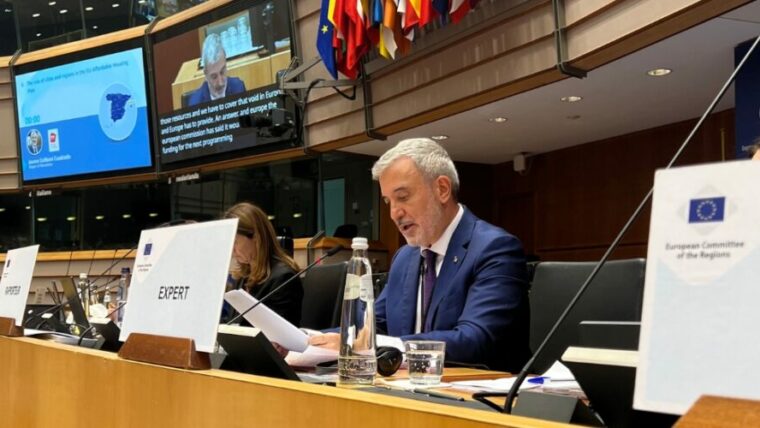
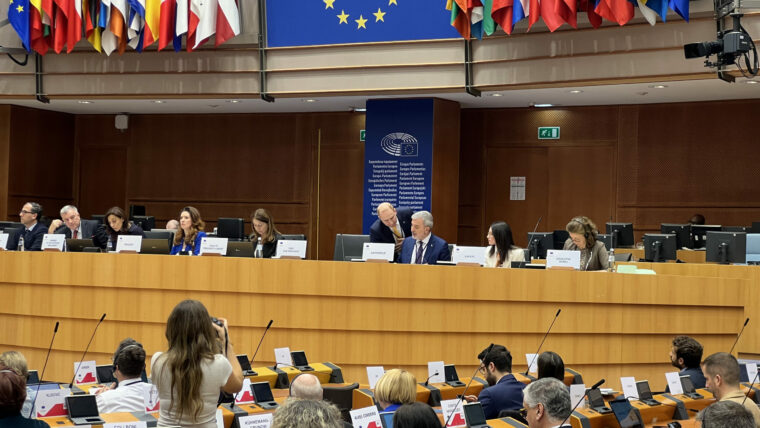
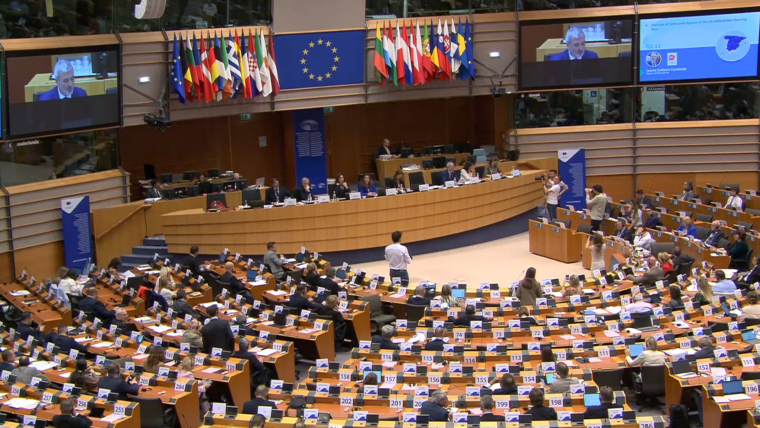
The Mayor of Barcelona, Jaume Collboni, participated in the 166th Plenary Session of the European Committee of the Regions held on May 14 in Brussels to advocate for the opinion “The role of cities and regions in the EU Affordable Housing Plan”, which was approved. Jaume Collboni -accompanied by the Commissioner for European Affairs, Mar Jiménez– is the first Mayor of Barcelona to speak as rapporteur in the Plenary of the Committee. Irene Tinagli, Chair of the European Parliament’s Special Committee on the Housing Crisis in the EU, also participated in the session.
In his address, the mayor emphasized that “today we are taking a giant step” towards making “a genuine European housing policy” with the approval of the opinion, and that what is at stake in Europe is “the right to live in our cities, not to feel expelled, to start a family, a life project in the city where we were born, to preserve our plural and diverse identity, our neighborhoods, our commerce, and the European way of life.”
Collboni stressed that “across Europe, we are facing an unprecedented social housing crisis, which not only impacts the basic right to a home for the most vulnerable people, but also affects millions of working and middle-class families in European cities.” He stated, “the message is clear: we cannot fail, we must rise to the occasion,” concluding that “this must be the European housing mandate.”
Regarding the opinion, the mayor explained that “it proposes a roadmap: more funds for the construction and renovation of protected and affordable housing, better regulations, and greater decision-making capacity for cities.” The proposal is based on two premises: “we must guarantee the right to housing as a universal right, and we must do it now -we cannot wait; and we must uphold the principle of subsidiarity: what can be resolved at the local and regional level should be resolved at the local and regional level.”
Specifically, Collboni called for “more resources now -we cannot wait until 2028, and in the meantime, we must use all the instruments at our disposal,” such as unclaimed Next Generation funds and the ongoing review of Cohesion Policy, which is a key long-term instrument.
On regulation, he highlighted that Barcelona is changing the rules of the game, and pointed out that the opinion proposes reforming state aid rules to broaden the target audience of public housing policies, expanding restrictions on short-term rentals in strained housing markets, and broadening the definition of affordable housing.
“The cities are ground zero of the housing crisis, and therefore, we must be ground zero of the solution,” said the mayor, stressing that “this opinion is, above all, an outstretched hand to the Commission, the Council, and the Parliament: here are the cities and regions ready to work for a European solution to a European problem.”
European Committee of the Regions: A Political Advocacy Space for Local Governments in the EU
At the end of 2023, Mayor Collboni was appointed by the Governing Board of the Spanish Federation of Municipalities and Provinces (FEMP) as one of the four members from Spanish local authorities to join the political assembly of the Committee of the Regions (CoR).
The Committee’s role is to present local and regional perspectives in EU legislation by issuing opinions on proposals from the European Commission. The European Commission and the Council of the EU must consult the Committee on matters of direct importance to local and regional authorities and may also seek its opinion at any time. The Committee can also issue opinions on its own initiative and submit them to the European Commission, the Council of the EU, and the European Parliament.
Members of the CoR are proposed by Member States and officially appointed by the Council of the EU for a renewable four-year term. The Spanish representation consists of 21 members: 17 regional representatives (and their substitutes) and four representatives of local entities (with their respective substitutes).