Barcelona strengthens its commitment to religious freedom through alliances with other cities
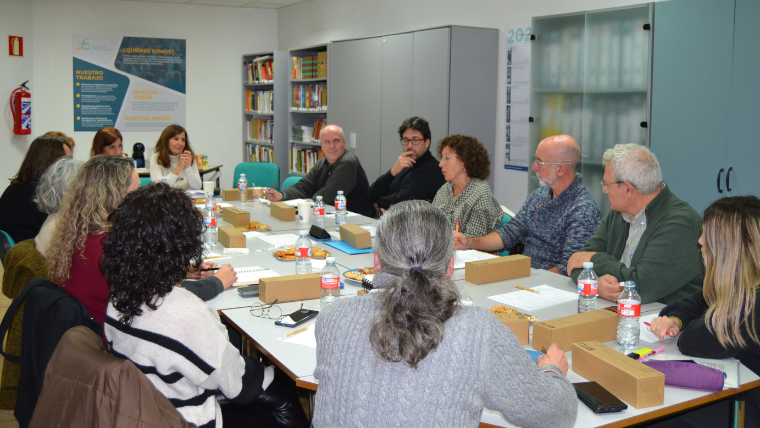
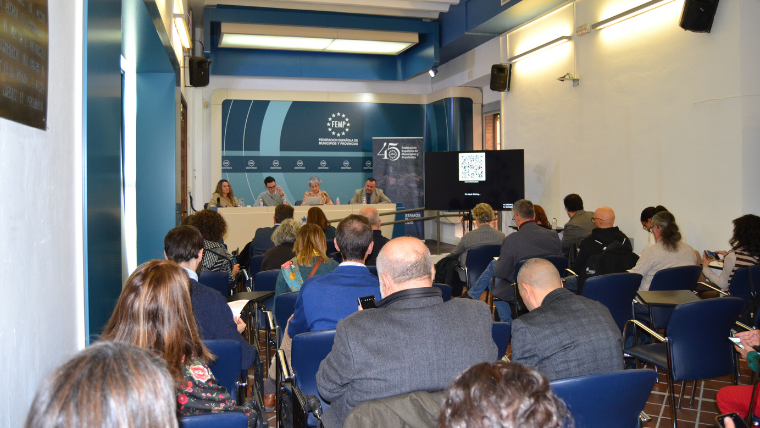
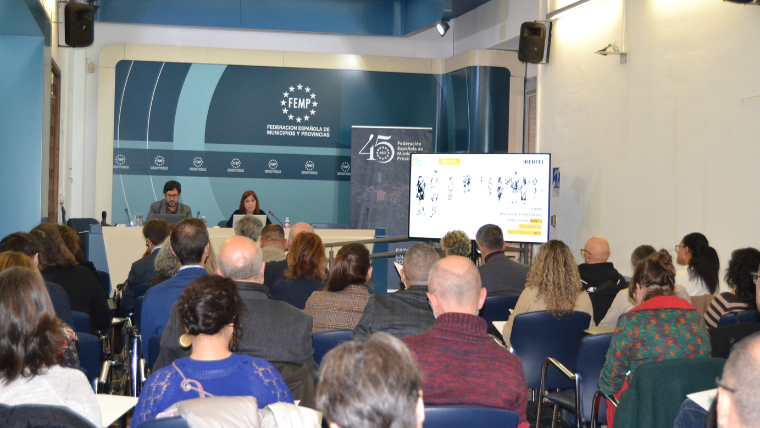
Barcelona City Council, through its Department of Multiculturalism and Religious Diversity, took part in the working meeting by Municipalities for Tolerance (MxT) on 25 November and the meeting ‘Local management of religious diversity: European learning and challenges for Spain’ on 25 November, held at the Spanish Federation of Municipalities and Provinces (FEMP) in Madrid. The session brought together institutional representatives and experts to look at the current challenges in managing religious diversity in the municipal sphere and sharing inspiring experiences at a European level.

Participation in national and European initiatives
Barcelona has been part of Municipalities for Tolerance (MxT) since 2021, an initiative to help local governments manage religious diversity in a democratic, inclusive and plural way. The project aims to give visibility to local councils’ commitment to the application of some basic principles and goals in managing religious diversity included in a charter, and to provide signatory municipalities with the tools and resources needed to improve their everyday management. The project is an initiative by the Foundation for Pluralism and Coexistence in collaboration with the Federation of Municipalities and Provinces and with the support of the Human Rights Institute at the University of Deusto.
Barcelona shares the initiative with municipalities that include Bilbao, Burgos, Castellón, Fuenlabrada, Guadalajara, Malaga, Sabadell, Valencia, Valladolid and Vitòria-Gasteiz. In the meeting of 25 November, people representing different councils forming part of the MxT programme exchanged information, needs and recent experiences.
Barcelona also collaborates with the European project Religions & Tolerance (RETO), funded by the programme Citizens, Equality, Rights and Values Programme (CERV) by the European Commission (2024–2026), which has the goal of creating a network of European municipalities to share strategies and good practice relating to religious pluralism. The session “Local management of religious diversity: European learning and challenges for Spain”, on 26 November, featured some notable authorities such as Luis Martínez-Sicluna, secretary general of the FEMP, Inés Mazarrasa, director of the Foundation for Pluralism and Coexistence, and experts such as Puerto García, sub-director and head of programmes, studies and incidence with the Foundation for Pluralism and Coexistence. The latter made an analysis of the 2025 Barometer, while Gorka Urrutia, director of the Human Rights Institute at the University of Deusto, explained European governance methodologies for religious diversity. A space was also generated for dialogue between specialists who reflected on the present and future challenges in the area of local management and religious diversity in Spain.
Barcelona’s leadership and experience in the management of religious and spiritual diversity
From the Department of Interculturality and Religious Pluralism, and through the service provided by the Office of Religious Affairs (OAR), Barcelona has been at the forefront in supporting religious entities in the development of their activities and the exercise of their rights; has facilitated collaboration between religious entities, the citizen network and the City Council, and has raised awareness of the religious diversity that exists in the city.
The Office of Religious Affairs dates back to the year 1998 with the creation of the Interreligious Centre of Barcelona: a service created to ascertain the religious plurality that existed in the city and to promote co-existence between people of different faiths. The service was given a new impetus in 2005 when it was converted into a public office that addressed citizens directly, which focused its activity on protecting people’s rights and providing advice to religious communities. It has held its current name since 2008. A new chapter for this service began in 2017, when greater emphasis started to be placed on coordinating with other departments of the City Council and increasing other services beyond addressing the public directly, such as educational activities, technical training and activities conceived to raise awareness of issues among the wider public.
Active participation and vision of the future
With its participation in the two meetings, Barcelona reaffirms its role as a leader in intercultural management and religious pluralism, undertaking to share its accumulated expertise with other municipalities, learn from models, proposals and European initiatives, and drive new strategies that strengthen dialogue and coexistence in the city.
Barcelona City Council will continue to work actively to guarantee the rights of all people, communities and collectives, promoting a diverse, plural and cohesive city.