
THE INTERVIEW | Laura Martínez: "Spiritual health has to do with how we face vulnerability, death and uncertainty"
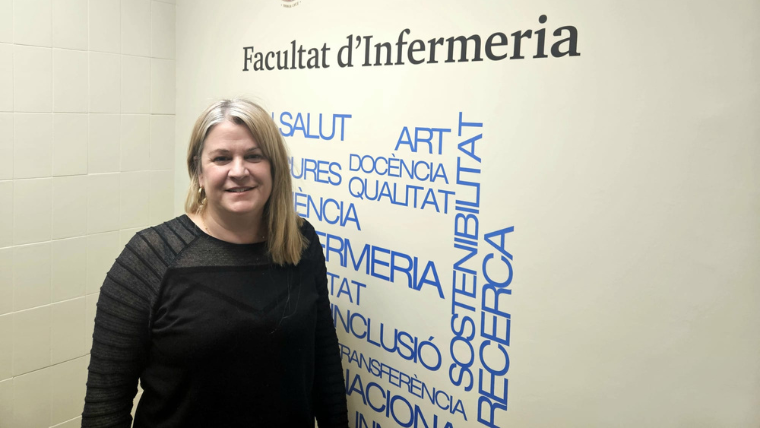
Laura Martínez Rodríguez has a degree in Nursing from the Ramon Llull University (URL) and a degree in Social Anthropology from the University of Barcelona (UB). She specialised with a master's degree in Bioethics and a master's degree in Culture of Peace and Mediation, combining a solid academic career with decades of healthcare and social experience. Currently, she is one of the leading voices in the field of spiritual health and co-director of the master's degree in Health and Spirituality at the University of Barcelona. We talk to her about how the spiritual dimension is making its way into the world of health, and how this perspective can transform the way we support people.
-
What led you to become interested in the intersection between health and spirituality?
As a nurse, I worked in the urgent and emergency care departments at the Hospital Clínic in Barcelona. It might not seem like it has much to do with this more humanistic, spiritual side of things, but that’s precisely where I discovered that I needed to look a little further. Because the patients coming to the emergency room came with anxiety about not knowing what would happen and managing uncertainty, really complicated situations that the person had to face. And in those first moments, that’s where the fear of “what will happen to me” would emerge. And I saw that I could administer drugs and control the pain, but that there was a suffering that was not resolved. There were other manifestations that I was not addressing, I was not taking care of or I was not prepared to take care of. I asked myself, “what about this aspect that is neither physical nor psychological?”. And I myself needed tools to understand it.
The first professional postgraduate degree I did was for emergency care, but then I felt the need to specialise in bioethics of care, because lots of questions arose in the extreme situations experienced in emergencies, which come suddenly. I was already doing Social Anthropology and I began to get much more into the philosophical world, specifically the world of anthropological philosophy. I couldn’t help but ask myself what a human being is and what needs there are, and I didn’t want to stick to mere technical care, let’s say. And it was from there that this intersection between health and spirituality grew.
A key moment that completely changed my perspective was the placement I did at the University of Leuven in Belgium, with Chris Gastmans, a leader in the world of bioethics of care. There it became clear to me that the spiritual dimension had to enter fully into research, training and care.
Although I had always had this humanist perspective in my mind. I believe that my entire professional, intellectual and life trajectory has converged in one place: understanding what a human being is and how we can care for them in a comprehensive way. My family context also influences this, because my mother worked with immigrants and my father was a special education teacher; at home, caring for others has always been experienced as a collective responsibility. I grew up seeing cultural, religious and social diversity.
-
How do you understand “spiritual health”? Is it possible to work on it without adhering to any religion?
Yes, absolutely. Spiritual health is part of the human condition. It has to do with the meaning of life, with how we face vulnerability, death, uncertainty; with the most profound questions that emerge in difficult times.
Religion is one of the ways to work on this dimension, but not the only one. Many people who are not religious have a very intense spiritual life. That is why we defend an open view, which allows everyone to find their path.
It’s interesting because fifteen years ago, research into spirituality had almost no recognition. Socially, there has been an evolution, perhaps as a response to tragic moments that we have been facing, or to the fact that spirituality and religion are no longer so directly linked socially. The institutions dedicated to care, both in the social sphere and in the health sphere, cannot give a response focused only on the physical dimension or the psychological dimension, there are other dimensions. And in this sense, spirituality has emerged with brute force, to respond to this profound social need.
We are seeing that when we talk about spiritual needs, people connect, and particularly young people, because they do not live with this historical burden that the concept of religion has. They have a connection with religions which is perhaps not so direct and this brings them closer to spirituality in a different way. Older people still live with the paradigm of religiosity and confuse it with spirituality. In general, I would say that there is a stigma and it is difficult to approach it.
-
How do you work on this dimension in the UB’s master’s degree in Health and Spirituality so that it does not lead to dogmatic views?
The master’s degree was born from a commitment made by a public university, specifically the University of Barcelona. We were looking for a public space without confessional burdens, which does not mean unlinked or separated from religion. Religion is a phenomenon that allows us to work on spirituality and develop it individually or in community with people, and from the sphere of anthropology we also defend religion as a cultural expression, but it cannot be the only one.
Therefore, we wanted a plural space, based on scientific evidence and respectful of all forms of spirituality. The aim is to help people understand what this spiritual dimension is and how to care for it from the professional field of health.
Above all, what we defend and what we believe is that this spiritual health is heritage, it is a need of every human being, and it is based on scientific evidence. Taking all this into account, we decided to do a master’s degree in Spiritual Health with a salutogenic approach.
This salutogenic approach helps us to focus not only on the disease, but on what strengthens us, what allows us to live with meaning. And there is a dual effect: on the one hand, we train the team of professionals to care for the spirituality of patients, but at the same time the student becomes aware of their own spiritual dimension. Scientific evidence shows us that this is a protector against the stress and burnout that, sadly, is experienced in the field of health. In addition, the latest research we are doing at the university tells us that students appreciate it, and they verbalise it, “I have built my profession from a different perspective, that is, the place I occupy in the world is much more human, it gives it much more meaning. It is authentic self-care”. The approach that the master’s degree gives you changes your view of health.
Neuroscience has helped us a lot in this sense, because it seems that we still need the physical basis, the physical substrate that validates that all this is possible. And we are seeing from neuroscience that this connection from the deployment of spiritual capacities favours, for example, all ethical deliberation, helps us to reflect on what is good and what is bad, the right or the wrong thing to do. And interestingly, it has a connection, very much at the level of neuronal circuits, with the artistic world, with the deployment of artistic sensibility. What neuroscience tells us is that our brain can be modified with some of the practices of spirituality, that these practices help it, as if you were doing spiritual gymnastics.
-
What path should the health system take to incorporate this dimension?
I think we have the tools, but what is missing? Capacity. That is, we have training oriented towards very technical or very biomedical aspects, and there is little space to talk about spiritual competence.
First, we must recognise that spiritual competence is a transferable or core skill, like ethics or critical thinking. Nursing care diagnoses already exist: suffering, hopelessness, loneliness… and many computer systems allow them to be recorded. They may be the least used, but the possibility exists, our health system allows it.
Care diagnoses can be pretty powerful when it comes to deciding whether or not a person needs certain resources. And we are moving towards a system with an increasingly ageing population, where people do not need so many medical diagnoses, which, in addition, with artificial intelligence will end up being much more agile. What we need is care. Old age can not be cured. And an end-of-life situation can not be cured. What is needed is care from different approaches, each from their own discipline. What happens is that there are still historical establishment powers that limit us in this aspect.
Therefore, I would say that what is lacking is training and spaces to develop these skills. We still have a very biomedical and technical system. But in an ageing country with ever more chronic diseases, what people need is care. And here the nursing staff play a key role, because they are professionals who are with the patient 24 hours a day and who are trained to make a comprehensive assessment. We need to find teaching spaces to be able to deploy and train students. We have managed to do this with some universities.
-
How does Barcelona’s spiritual and religious diversity influence the way we experience health?
Barcelona is an example of plural coexistence. I look back 25 years and I believe that one of the challenges that Barcelona had with the health system was being able to be sensitive to all the religious diversities that we welcomed and integrating this cultural diversity into the health circuit. At that time, cultural diversity was closely associated with material poverty, with situations of social exclusion, but this sensitivity was already there. And this has meant that now, when we encounter these spiritual needs, we can talk about them or address them. Today this is part of our DNA because we are now a plural society.
This openness has made it much easier for us to talk about spiritual health from an intercultural perspective. Here, inclusive proposals have a path forward, something that perhaps in other, more religiously closed contexts would be impossible. This cultural framework that we have in Barcelona, this openness, has made it much easier for it to make sense to talk about a diverse spirituality and spirituality as a dimension of the human being, and not from the perspective of a specific religion. Barcelona is a laboratory of spiritual and cultural coexistence. It is a privilege to be able to work from here.
And thanks to the fact that there is all this background, and because a lot of work has been done to raise awareness from the different associations and entities, this coexistence between spiritual and religious diversity and health is possible. This allows you to make much more integrative proposals from within the health system. If there were no such background, it would be more difficult.
We have also had the support of many religious communities; coexistence is possible and this allows you to make very integrative proposals. In Barcelona there are very powerful examples where religious identity is combined with social commitment.
-
What can we learn from the rituals and spiritual practices of traditions such as Buddhism, Christianity or Hinduism?
Historically, religions have always had in their codes religious practices that, in their origin and purpose, sought to protect and care for health: food, hygiene, meditation, community life, protective rites…
For example, the prohibition of eating pork within Islam had to do with a community health situation at the time, or the Code of Hammurabi already codified rules related to public health, but the way to legitimise them was to include them within religion.
What current scientific evidence tells us is that the practice of religion is a protective factor. People who practice a religion, people who have beliefs and who live life according to these values, have a salutogenic approach to their lives. This does not mean that those who do not have a religion do not have this approach; this is the confusion. Spiritual well-being can also develop outside of a specific religion.
With regard to rituals, many have measurable positive effects. Rituals that may exist in the physical realm, for example, purification, have been present throughout time. And, with regard to meditative practices, there are now studies that derive from all that Buddhist meditation, but there are also studies on the practice of the rosary, for example, which has a similar effect to these meditations, due to repetition.
This confirms that many religious practices, whether they come from Buddhism, Christianity, Hinduism or other traditions, activate neural circuits related to emotional regulation, calm, meaning and connection. These practices have a positive effect on many levels and are part of a historical background in which health has always been a value.
The conversation with Laura Martínez leaves us with a central idea: care is what makes us human. As she explains, health cannot be understood only from the body or from psychology, but needs a broader perspective that recognises the spiritual dimension as a constitutive part of the human being.
For her, spirituality is a way of living life with meaning and hope, a way of asking ourselves who we are, what sustains us and how we can face pain, uncertainty or loss. It is about supporting each person based on their uniqueness, their own language of life
Spiritual health is everyone’s heritage, whether they follow a religion or not. We need to recover what humanises us: meaningful relationships, community, inner life… And incorporating this perspective into health is an essential step to build a more complete and, above all, more human model of care.