
Political and social participation
Social, political and community participation is of essential importance in the construction of the city.
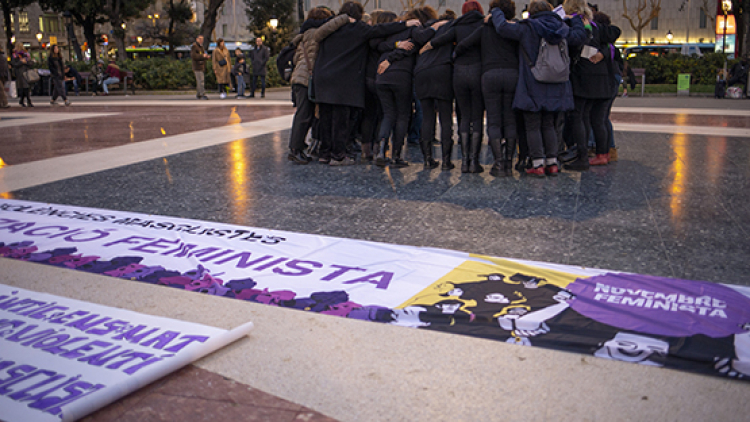
Based on the privilege derived from the sexual division of labor, which allows them to have more of their own time to dedicate to it and, therefore, influence the decision-making of organizations, men have a much more marked public dimension. In this way, their voice and their specific needs are overrepresented. Therefore, promoting women's participation in the design, elaboration, development and evaluation of public policies is key to reversing gender inequalities.
Note for screen reader users. This gallery shows one element, which can be an image or a video. Use the controls from the ‘Gallery Controls’ area to show the previous or the next element. You can also click on the element you wish to visualise.

Slide of 1
Social and community participation
The majority of people who participate in the city's organizations and associations are women, although there is a certain gender specialization depending on the field. However, this participation is often hindered by the difficulties of reconciling family and work life, which are more present in the lives of women than men.
Political and institutional participation
To guarantee equality, it is necessary that policies are not only aimed at women, but also that women are present in political decision-making bodies. In recent decades, their participation has increased to the point of achieving parity in terms of political representation. However, situations of segregation still occur in the different spaces of representation and institutional participation.