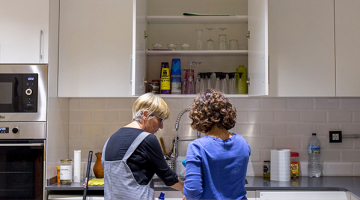
Care work
The International Labour Organisation defines care work as the work of looking after people’s physical and emotional needs, whether in the formal or informal economy, in the public or private sphere and in a paid or unpaid capacity.
Historically, and to this day, these activities have been carried out mostly by women and have been undervalued, both socially and economically.
Barcelona City Council implements public policies to recognise care work as a right of city residents and promote the co-responsibility and sustainability of life. One example is the government measure ‘Barcelona advancing the right to care (2025–2030)’, which lays out a roadmap to guarantee this right from a feminist, intersectional and community perspective. Within this framework, projects such as Barcelona Cuida offer designated spaces for carers and professionals in the sector.
How the gender perspective can be taken into account in care policies
Integrating the gender perspective in care policies involves:
-
Recognising that care work is a collective responsibility and should not fall exclusively to women.
-
Redistributing care work among different stakeholders, between women and men, etc.
-
Reassessing the value of care work, both paid and unpaid.
-
Incorporating diverse situations and needs (age, origin, legal status, different abilities, etc.) in the design of care services and policies.
To make this possible, we must:
-
Guarantee decent working conditions in sectors associated with care, which are often female-dominated and rife with insecurity.
-
Promote co-responsibility among men and women, public institutions, the community and the private sector.
-
Include gender and equity indicators in the assessment of services.