Support for local retail
To meet the challenge of preserving and enhancing a retail model rooted in the values of proximity, sustainability and identity while protecting the city’s unique and iconic shops, Barcelona will carry out a set of actions to strengthen its retail community. These initiatives focus on modernising the city’s markets and commercial establishments, supporting local commerce and carrying out responsible and sustainable consumption initiatives.
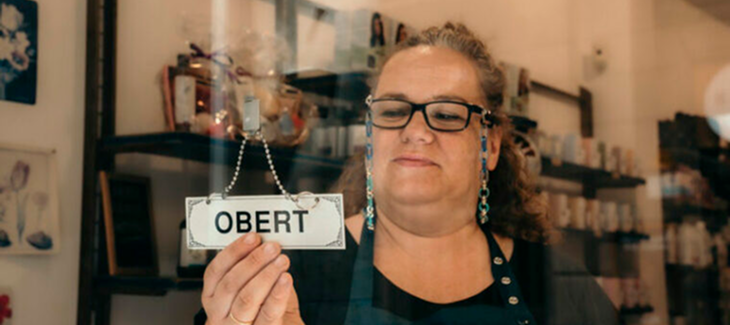
Boosting local retail
The globalisation of the economy has led to the presence of major brands in the world's main cities, and Barcelona is no exception. For this reason, the City Council will launch initiatives to revitalise local retail in areas where the recovery of local retail businesses is needed. Through promotional campaigns, digitalisation initiatives in retail and support for the creation of new businesses, the City Council will work to ensure the vitality of Barcelona’s local retail network.
-
Barcelona aims to make the city's Christmas festivities a cultural benchmark for local retail through cultural and musical activities across all its districts. A unique Christmas lighting model with a personalised design will be developed to promote local retail, working in collaboration with shopping hubs, retail associations and the city’s markets.
-
Shopping hubs play a crucial role in developing policies that promote and support local retail and ensure that initiatives reach individual establishments. As key reference points for local retail, these hubs need strengthening. To achieve this, projects integrating retail, tourism and culture will be developed as the hallmarks of these hubs, with municipal support and promotion needed to maximise their impact. An analysis will be conducted on the density of shops in different neighbourhoods, particularly in areas affected by long-term construction projects or with retail deficits. This will help diagnose their potential and define the necessary revitalisation actions in conjunction with the respective district authorities.
-
Physical measures will be implemented to enhance the accessibility of shops and restaurants across the city, with a particular focus on people with mobility challenges and iconic establishments. Efforts will also be made to enhance access to local retailers with innovative online tools to enrich the shopping experience and make it more accessible. These initiatives include installing ramps, lifts and other devices to make it easier to enter the establishments, as well as developing digital platforms that improve virtual accessibility to the goods and services offered by local retailers.
Incentives to promote local retail through local purchasing
The City Council will launch various initiatives to encourage local consumption across the city in a coordinated manner. These initiatives will specifically target local retailers and will be implemented in conjunction with second- and third-tier trade and hospitality sector organisations.
These actions will also support the sector’s digitalisation, while simultaneously gathering data on retail activity and consumer flows.
Modernisation of Barcelona’s markets
-
Barcelona's markets provides citizens with quality products and promote a healthy lifestyle, social cohesion and neighbourhood coordination, while boosting the economy and employment within the framework of local retail. All this contributes to Barcelona’s model as a city of well-being Markets act as engines of social, economic, urban and sustainable development, enhancing Barcelona residents’ quality of life.
During this term, 50% of municipal markets are set to undergo full or partial renovation. This includes the construction of new ones such as the Abaceria, Montserrat, Horta and Estrella markets, alongside structural improvements to Hostafrancs and Galvany, among others. As a result, half of the city’s markets will undergo a significant transformation.
Additionally, the renovation of the Boqueria market will take place to ensure it keeps its role as a municipal market while preserving its uniqueness and maintaining an array of retailers that guarantee its long-term viability.
Furthermore, various initiatives will be carried out under the ‘Mercats i Barris’ [Markets and Neighbourhoods] programme, including events such as ‘Mercat de Mercats’ [Market of Markets], ‘Tasta’m’ [Try Me food event], ‘Aules de Cuina’ [cooking classrooms] and other activities aimed at boosting the local economy and employment through neighbourhood retail.
-
To drive the modernisation of Barcelona’s markets, a stronger unified brand identity will be developed, blending traditional values with emerging trends to set them apart. Additionally, a new strategic plan for the city’s markets will be designed. Its development and implementation will involve shopkeepers’ associations, the Federation of Municipal Markets of Barcelona (FEMM) and the Advisory Committee to ensure that markets continue to serve as key hubs for neighbourhood life and economic vitality.
-
Currently, the existing land-use plans across the city are currently being analysed and monitoring to assess the retail balance and update studies based on revisions agreed upon with important sectors. Additionally, an ongoing census of retail premises will be maintained, which is the foundation of the Barcelona Observatory for Commerce and Restaurants, which will allow for trend analysis and provide high-quality information for decision-making. Finally, a new byelaw will be developed to regulate municipal markets, alongside adjustments to tax regulations and the internal operational regulations for the Boqueria market, in alignment with Plan for the Future of the Boqueria.
Promoting sustainability in retail and Mercabarna
-
Mercabarna is partnering with Barcelona City Council and Ecoenergies to spearhead an innovative project aimed at utilising the cold generated during the natural gas gasification process at the Port of Barcelona. This project seeks to enhance energy efficiency, potentially saving up to 30% on energy bills, while also lowering CO2 emissions and promoting environmental sustainability.
Furthermore, Mercabarna is implementing new sustainable models through awareness programmes to reduce waste production and minimise food waste. These programmes address the use of plastic packaging, improve the logistics of middle-mile delivery and promote local sourcing. The Strategic Plan for Food Use Plan aims to lower food waste by optimising waste management and partnering with the Food Bank.
Finally, the second phase of the Solar Panel Incentive Plan at Mercabarna involves the installation of photovoltaic panels as part of the MESBarcelona programme. This initiative aims to promote the use of renewable energy at Barcelona's wholesale market to contribute to environmental sustainability, lower carbon emissions and foster a more eco-friendly and sustainable environment.
-
The ‘Green Commerce’ programme and the Barcelona 2030 Strategy for Healthy and Sustainable Food (EASSB 2030) complement each other to promote a green economy model and a more sustainable food system in the city.
The ‘Green Commerce’ programme focuses on boosting sustainability in local retailers through direct communication with shopkeepers, which includes guidance on the use of organic and local products. Through awareness campaigns, the programme aims to inform citizens about the importance of consuming sustainable products, while improving establishments’ signage to highlight green products. The programme also ensures compliance with established criteria to guarantee the authenticity and quality of the products offered.
Simultaneously, the EASSB 2030 is a tool designed to improve the health of individuals, economies and the planet. This strategy is being carried out in conjunction with stakeholders from Barcelona's food system and aims to promote cooperation and project coordination. In this context, the Municipal Action Plan for Sustainable Food 2023/2024, 2025/2027 outlines the City Council’s actions related to sustainable food, focusing on building a fairer and more sustainable food model for the entire city.
Currently, the following actions are being carried out under the EASSB 2030 framework:
- Promotion and support of sustainable food fairs and events: fairs focused on sustainable food are promoted and supported, such as the annual ‘Terra i Gust’ Sustainable Food Festival, which highlights the value of sustainable food and the consumption of local, organic and seasonal products. Partnership with the Gastronomic Forum helps integrate sustainable food criteria into gastronomy, and support is provided to participate in Biocultura to promote urban food policies and healthy, sustainable eating.
- Support for Terra Pagesa, the exchange centre for locally sourced food: The aim is to promote the green economy through collaboration with Terra Pagesa to connect producers and shopkeepers in order to facilitate access to local and organic products. Strengthening the connection between producers and consumers boosts the local economy and promotes more conscious and responsible consumption, contributing to the development of a more sustainable and equitable society.
- ‘Healthier and More Sustainable School Canteens’ programme: The programme focuses on health and sustainability by addressing the development of educational materials, communication and training to promote healthy and sustainable eating habits throughout the educational community.
- Launch of the Joint Office for Sustainable Food (OCAS): Barcelona coordinates and participates in working spaces to share strategies, goals and resources that contribute to transforming the food system into a sustainable model. This includes integrating this approach into public policies and projects within the framework of the Strategic Food Plan for Catalonia 2021-2026, the Barcelona Healthy and Sustainable Food Strategy 2030 and the Food Charter of the Metropolitan Region.