

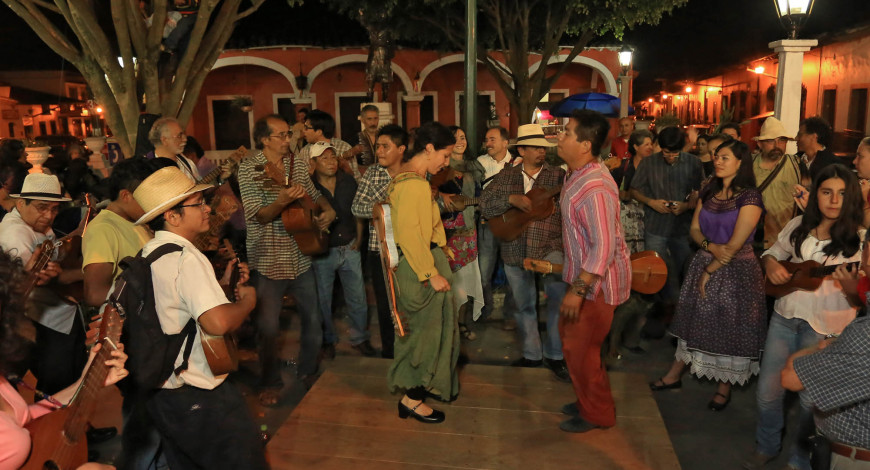
Culture and identity in the fandango jarocho
Culture, identity, celebration, and cultural hybridation are some of the themes discussed in this conversation preceding the son jarocho festival, originating from the Sotavento region of Veracruz, Mexico, and now a global phenomenon combining elements of Indigenous, African, and Spanish traditions with urban culture.
What is the role of the fandango in the diaspora? How is spirituality experienced in this celebration? What does it mean today to participate in an open fandango jarocho?
The conversation includes the screening of Isaac Kerlow’s short film Fandango en Chinameca and an open discussion with various musicians and members of the jarocha community.
Participants:
Ramón Gutiérrez Hernández
Musician from Veracruz and musical director of Son de Madera, composer and laudero.
Cecilia Gómez Aguilar
Dancer with Son de Madera, specialized in various dance styles: folkloric, African, Afro-Cuban, traditional son jarocho, salsa, Cuban son, and flamenco.
Simao Hernández Carrillo
Anthropologist from the National School of Anthropology and History and musician. Researcher of the jarocha and huasteca traditions. Has participated in various musical formations between Mexico and Barcelona. Also works in intercultural and community mediation.
Leopoldo Novoa Matallana
Colombian-Mexican composer and performer, born in Bogotá. Member of the Son Jarocho groups Zacamandú and Chuchumbé, and founder of Tembembe Ensamble Continuo, a group regularly invited by Jordi Savall and Hespèrion XXI.
Moderator: Pedro Strukelj, cultural manager at Casa Amèrica Catalunya.
Co-organized with the Office of Religious Affairs
In collaboration with Casa Amèrica Catalunya and Casal de barri Can Carol