[REGISTRATION IS OPEN!] Workshop: ‘Religious freedom within the framework of interculturality’
The workshop ‘Religious freedom within the framework of interculturality’ will be held at different venues around the city from Tuesday 28 February to Thursday 2 March, organised by the OAR in conjunction with the Museu Etnològic i de Cultures del Món (MUEC). This workshop invites religious communities and organisations, as well as scholars and members of the public administration, to take stock of the actions carried out in recent years to fulfil this right within the framework of intercultural Barcelona. The workshop will include a keynote speech, working committees, guided tours and a variety of workshops with the collaboration of Cementiris de Barcelona, the Barcelona Cathedral and Saint George parish church (Patriarchy of Romania).

SIGN UP HERE!
Religious pluralism has become a part of interculturality policies thanks to the new Barcelona Interculturality Plan (2021-2030) (Spanish), which is not only committed to working towards real, effective equal rights but also entails recognition of and respect for the cultural diversity and religious plurality of society, which must be borne in mind and valued, and the goal of facilitating positive interactions, the creation of bonds, participation and intercultural dialogue under equal conditions.
The workshops are designed to focus on this new intercultural framework for the effective application of the right to religious freedom in the city of Barcelona. They will make it possible to take stock of the actions that have been carried out in recent years in regard to effectively fulfilling this right while also compiling requests and proposals from various city communities and organisations. It is essential to become aware that religiousness and spirituality are present in the day-to-day lives of Barcelona residents in many areas of society, such as education, the workplace, the use of public spaces. Furthermore, the pandemic led to new places for meeting, working and adapting, such as digital communities, in regard to religious communities and organisations in general and Barcelona in particular.
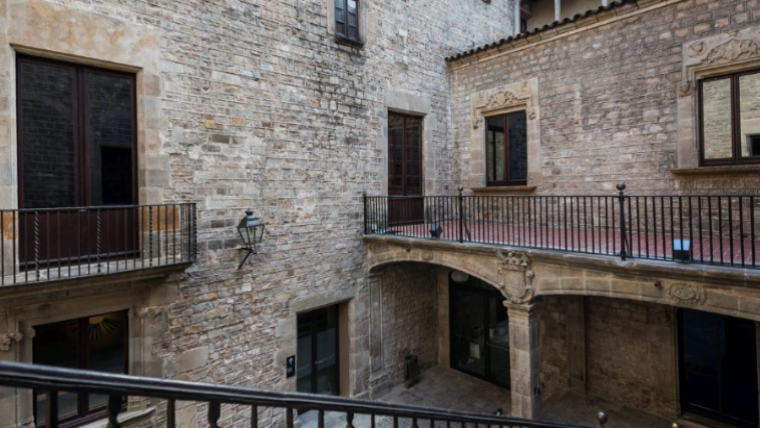
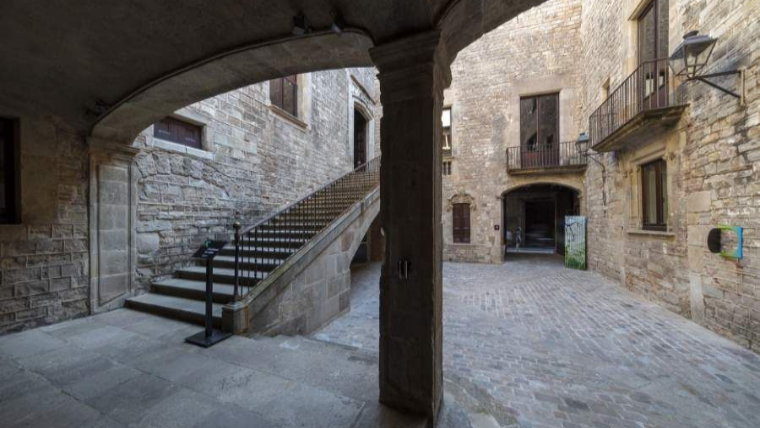
The Museu Etnològic i de Cultures del Món (MUEC) and the OAR are once again joining forces to organise these workshops: the MUEC will be the venue for the workshops on 28 February and will also offer a guided tour of its collection: ‘Sacred journeys. Humanity and religions’. Other organisations partnering in this workshop include Cementiris de Barcelona, Barcelona Cathedral and the Romanian Orthodox Sant Jordi church.
The entire workshop programme has been designed with activities in different formats that combine spaces for reflection with more participative and experiential activities. The aim is to make room for different forms of expression beyond academic discourses, with a view to reaching a wider audience. In this way, the workshops aim to attract a wider, plural audience from different spheres: the city’s religious and spiritual communities and organisations, the main stakeholders in the workshop; municipal officials, who are also major figures in the scenarios presented during the workshop; scholars, researchers or people interested in various aspects relating to one of the conference themes; and members of the general public who are interested in the effective application of religious freedom within this new intercultural framework.
PROGRAMME:
The activities are free of charge and but capacity is limited. PRIOR BOOKING is required for each individual activity HERE.
Tuesday, 28 February
→ Venue: Museu Etnològic i de Cultures del Món (MUEC)- Montcada branch (Carrer de Montcada, 12-14)
Morning
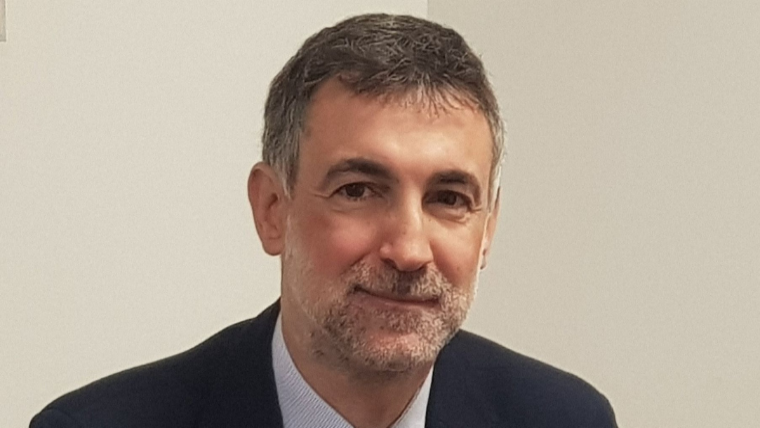
The Museu Etnològic i de Cultures del Món, at its Montcada branch, is hosting the first day of the workshop, which will be led by Mohamed El Amrani, communicator, social entrepreneur and president of the Associació Azahara. It will start at 9:30 am with a WELCOME AND INSTITUTIONAL OPENING. At 10:00 am, it will be followed by the KEYNOTE ADDRESS, ‘Public management of religious diversity: Challenges and proposals’, by Eduardo Ruiz Vieytez, dean of the Faculty of Social and Human Sciences at the University of Deusto. This scholar has researched, worked and written in the fields of national minorities, human rights and cultural, linguistic and religious diversity. Next, there will be a coffee break.
After that, there will be four consecutive round tables, which aim to become spaces of debate and dialogue, in order to give voice to religious pluralism and awareness in Barcelona, along with the evaluations and experiences arising from the four main themes under consideration They will be led by activists and scholars with extensive experience in studying the management of religious diversity from the fields of sociology and anthropology. Religious communities and organisations will be taking part, along with municipal officers from each area.
- 11:00 am – 12:30 pm: WORKING COMMITTEE ‘Thirty years of the 1992 agreements. Shared requests’, moderated by Lola López, a cultural anthropologist and expert in intercultural perspectives. Participants will be from the following organisations: Union of Islamic Centres of Catalonia (UCIDCAT), the Evangelical Council of Catalonia (CEC), the Israelite Community of Barcelona (CIB), the Catalan Coordinator of Buddhist Organisation (CCEB), the Office for Non-Discrimination (OND) and the Religious Affairs Office, both from the Barcelona City Council.
- 12:30 – 2:00 pm: WORKING COMMITTEE ‘Festivals, visibility and symbolic recognition’, moderated by Avi Astor, adjunct professor in the Department of Sociology at the Autonomous University of Barcelona (UAB) and member of the Research in Sociology of Religion (ISOR) research group. Participants will be from the following organisations: ATID Jewish Community of Catalonia, the Diocesan Secretariat of Brotherhoods and Confraternities of the Archdiocese of Barcelona, the Cultural Rights delegation and the direction of cultural programmes at the Barcelona Institute of Culture, both from the Barcelona City Council.
Afternoon
After a break, the next two working committees will continue:
- 3:30 – 5:00 pm: WORKING COMMITTEE ‘Exercising the right to religious freedom in the workplace’, moderated by Isabel Cano Ruiz, PhD in Law and professor of State Church Law at the University of Alcalá (UAH). The following organisations will participate: the Association of Muslim Students of the Autonomous University of Barcelona (UAB), the Adventist Council of Catalonia, the Gurdwara Guru Darshan Sahib, the Department of Interculturality and Religious Pluralism and Barcelona Activa, both from the Barcelona City Council.
- 5:00 – 6:30 pm: WORKING COMMITTEE ‘Digital communities, online religions’, moderated by Míriam Díez Bosch, director of the Chair of Religious Freedom and Conscience (Blanquerna, URL). The following organisations will participate: the Local Spiritual Assembly of the Baha’i Community of Barcelona, the Hakuna Catholic movement, the Espai Torre Jussana and the Canòdrom – Digital and Democratic Innovation Centre, both from the Barcelona City Council.
Next, at 6:30 pm the PUBLISHED REPORTS from the following will be presented:
- The workshop ‘Religious freedom in Barcelona: Current situation’ (Catalan), which was held in February 2020, with the aim of compiling the city’s good practices and shortcomings in regard to the exercise of freedom of religion and worship, and to evaluate the current situation in order to work on it during Barcelona City Council’s current term of office.
- The workshop ‘Religious pluralism in a secular world’ (Catalan), held in November 2021, which reflected on a key factor in public policies, namely secularism, by analysing models of secular states and more specific factors in which secularism is reflected, such as schools, how death is handled and international cooperation.
Finally, at 6:45 pm will be the INSTITUTIONAL CLOSURE.
From 7:00 to 8:00 pm, the institution that hosted the first day of the workshop, the MUEC, will offer a GUIDED TOUR of ‘Sacred journeys. Humanity and religions” in its collection. The visit focuses on the fact that societies coexist with sacred elements which are concerned with their conception of the world, narratives and theories about their origin and function, the place of humans and the causes of misfortune. During the tour, visitors can discover some of the world’s major religions, including Christianity, Hinduism and Buddhism, as well as others, such as the Yoruba religion from Africa, the Australian Aborigine religion from Oceania and the pre-Columbian Mayan religion from America. This initiative was chosen as a prime example of cooperation among different convictions and kinds of spirituality which enables us to showcase the legacy of different minority traditions.
Wednesday 1 March
- 12:00 – 1:30 pm: GUIDED TOUR of the exhibition ‘Jewish memory in the Barcelona Cathedral’ by Father Robert Baró, director of the Diocesan Secretariat of Cultural Heritage. The exhibition, which provides access to historical documents about the mediaeval Jewish community of Barcelona, is a selection from a set of 40,000 mediaeval parchments housed at the Barcelona Cathedral. This is a unique body of mediaeval archival documentation with thousands of references to the city’s Jewish community.
→ Venue: Barcelona Cathedral (Pla de la Seu, s/n. Meeting point: main door)
- 4:00 – 5:30 pm: PRESENTATION of the future multidenominational space on Montjuïc by Miquel Trepat, director general de Cementiris de Barcelona. This project for a multidenominational space will allow the different religious communities to carry out their funerary traditions and guarantee that the body purification processes are done by the community itself. The presentation will be held at the Funerary Library, located next to the Collection of Funeral Carriages, the only one of its kind in the world, which participants may also view.
→ Venue: Funerary Library at the Montjuïc Cemetery, Collection of Funeral Carriages (Carrer de la Mare de Déu de Port, 56-58)
Thursday 2 March
- 4:00 – 5:00 pm: PRESENTATION of the educational and pedagogical activities promoted by the Religious Affairs Office (OAR) by Lorena Spinola, consulting education officer at the OAR. Cultural and religious diversity is, among other things, an enriching element found in all spheres of our society, including the educational community, and has become a reflection of the city’s diversity. Knowing and understanding this cultural and religious plurality is a key tool for educating and raising young people with values and therefore ensuring community harmony and respect. In this initiative, the OAR will present different tools and resources it has been using both inside and outside the classroom to educate on diversity and to make it visible.
→ Venue: Religious Affairs Office, OAR (Carrer del Comerç, 44)
- 6:00 – 7:30 pm: GUIDED TOUR of Saint George parish church, the first monumental worship centre of the Romanian Orthodox Church, by Aurel Bunda, parish rector. This Orthodox parish was established in a newly-built centre on a small but well-situated plot of land and has distinct spaces. One of the most noteworthy parts is the wall paintings and the technique used to make them: fresco, a feature of the Romanesque, like the fresco found in the Vall de Boí (using the same technique as in the Middle Ages).
→ Venue: Saint George parish church, Patriarchy of Romania (Carrer de Capella, 25)
Individuals needing accessibility measures may let us know by sending an email to activitatsoar@bcn.cat or phoning 682 481 915 (9:00 am to 2:00 pm) by 20 February.
You can keep up to date with the workshop using the hashtag: #OarBCN and on Instagram @bcn_interculturalitat.
See you there!