Barcelona participates in the International Forum on Time in Bogotá
Barcelona City Council, a global leader in time and care policies, has participated in the International Forum on Time in Bogotá.
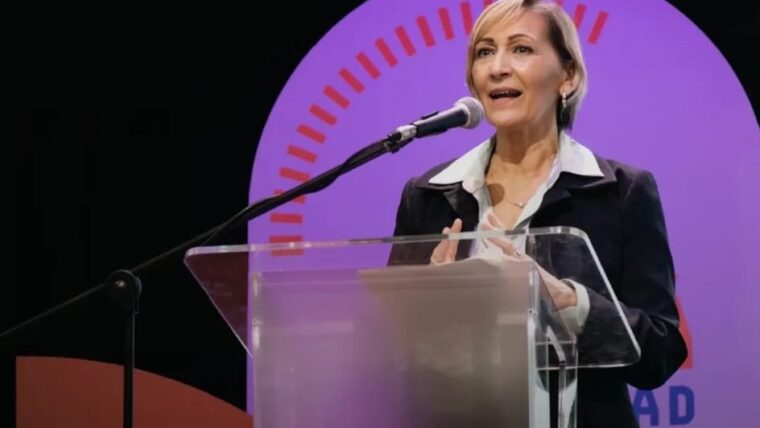
» Barcelona City Council, a global leader in time and care policies, participated in the Forum to share its experience with Latin American institutions with the aim of working together to realise the right to time at local and regional level.
» Participation took place within the framework of the World Network of Local and Regional Governments for Time Policies, which brings together some forty cities, including Barcelona, which is a founding member.
» The Forum promoted the incorporation of six new Latin American cities into the World Network as part of Bogotá’s efforts to promote time policies in the region.
From 23 to 25 September 2025, Bogotá hosted the international forum ‘Women’s Time: Gender and City Building’, a key event organised as part of its role as World Capital of Time Policies 2025.
A delegation made up of Barcelona City Council, the Government of Catalonia, Barcelona Provincial Council, Barcelona Metropolitan Area, and the Time Use Initiative travelled to the Colombian capital with a clear objective: to exchange good practices and success stories in the field of time policies, particularly those related to care, mobility, and working and school hours.
Representing Barcelona City Council were Maria Rengel and Míriam Martínez, director and technician of the Directorate of Feminist and LGTBI Services, who highlighted the council’s more than 30 years of experience in promoting time policies.
María Rengel was one of the speakers who opened the forum, together with Carlos Fernando Galán, Mayor of Bogotá, and Laura Tami, Secretary for Women in the Colombian capital. In her speech, she stressed the importance of Bogotá joining the Global Network: “Bogotá’s membership of the Global Network means opening up new horizons. Projecting these policies in Latin America is an inspiration for many cities in the region”.
During the forum, Rengel also took part in the panel discussion ‘Enjoying the city: a gender-focused perspective’, a space for debate that focuses on the need for the city to be a safe, diverse, and inclusive environment where women can enjoy culture freely and without violence, both during the day and at night. The director of feminism and LGTBI services gave the example of Barcelona, highlighting how initiatives such as the ‘We won’t keep quiet’ protocol and the ‘Purple Points’ have transformed the city’s nightlife. These measures combine surveillance of spaces, training of leisure staff, and victim-centred care.
For her part, Míriam Martínez was one of the facilitators of the workshop ‘Time policies, from theory to practice’, aimed at applying theory to real experiences and showing how time policies can be a driver of equity and well-being.
During the session, the ‘Time Pact’ project was highlighted, which has made it possible to consolidate a solid structure for moving towards a social organisation of time adapted to the diversity and interests of an active city. As Míriam Martínez pointed out: ‘These milestones have been achieved thanks to the shared commitment of more than 300 organisations, companies and social movements that have joined the initiative.’
Martínez also participated in ‘La Ventana del Cuidado’ (The Care Window), a space where different cities in the Network, such as Barcelona, Popoyán, Pichincha and Cale, presented their care systems. In this context, the representative of Barcelona City Council presented the Catalan model and shared experiences of its challenges and advances. The session culminated in a dialogue with women carers and those responsible for care policies in the ‘Manzanas del Cuidado’ (Care Blocks).
Bogotá World Capital of Time Policies 2025
Bogotá was designated World Capital of Time Policies by the World Network of Local and Regional Governments for Time Policies, becoming the first Latin American city to obtain this designation. This recognition is based on its ambitious agenda in the field of care time, with projects such as the ‘Care Blocks’, a benchmark in the region. This initiative not only offers proposals specifically aimed at care, but also integrates services that facilitate daily life and contribute to gaining time for training and personal autonomy.
With their participation, Catalan institutions, which are the main promoters of the Network, have supported Bogotá as Capital of Time and have continued to develop Ibero-American collaboration with other cities and supra-local entities in the region.
The forum served as the venue for the signing of the ‘Bogotá Commitment’, a continuation of the Barcelona Declaration on Time Policies, also promoted by Catalan institutions with the aim of involving public administrations, the world of research, and the social fabric in making the right to time a reality. This has enabled cities such as Medellín and Cale in Colombia; Popayán, Pichincha and Imbabura in Ecuador; and Niterói and the Federation of Municipalities of Brazil to participate in this initiative.