Study of the profile of visitors and degree of satisfaction of businesses


The "Food 2010" project proposes a quantitative analysis of purchasing and consumption habits of specific types of emerging food products, related to forms of consumption, to forms of production and to products with quality assurance.
The HORECO channel (Hotels, REstaurants, COllectivities, Catering) is a strategic channel within the economic structure: it accounts for 7% of GDP, according to data from the Spanish Hospitality Federation.
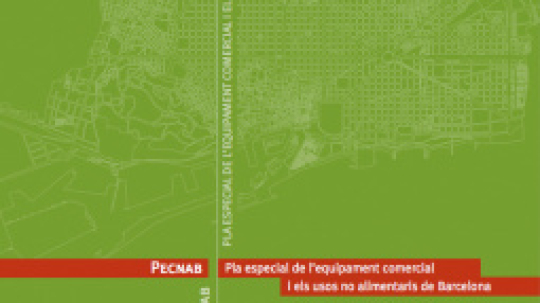
This document shows the Special Plan for Commercial Equipment and Non-Food Uses in Barcelona, approved at the Municipal Council Plenary on February 23, 2007. It includes the statement of reasons and the applicable regulations.
Mercabarna study that analyzes trends, priorities and medium-long-term model changes in the agri-food sector, which pursue sustainable consumption and production guidelines against the constraints imposed by limited resources on the planet.
Approved by the Plenary of the Municipal Council on March 27, 2015. Published in the BOP on May 8, 2015. Ordinance on establishments and food retail centers of Barcelona, 2011. Approved by the Plenary of the Municipal Council on April 29, 2011.
Study, prepared jointly by "Barcelona Activa" and the consulting company "BeagleConsulting", which aims to know the needs and challenges of the sector in the field of Human Resources, create a training map, and identify critical aspects that, having considering the current situation, they emerge as structural deficiencies in trade.
The Report on Positive Impact Trade (CIP) offers a new system for assessing the positive externalities that trade can provide to the City with the aim of applying public policies based on incentives to promote this trade.
The objective of this report is to measure the return on investment of the decorative lighting project carried out by Grup Ximenez in Plaça Catalunya.
The study "Forecasts on the evolution of consumption in Catalonia, 2012-2022" analyzes consumer demand and the trend in consumer spending. The study makes some recommendations for commerce to adapt to the new social reality and the new consumption habits resulting from the sociological and demographic changes of the next decade.