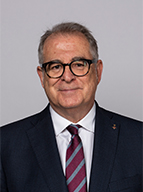
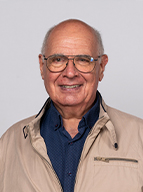
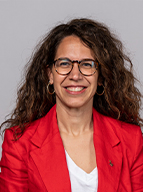
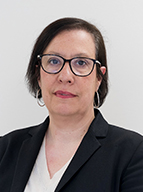
Barcelona City Council is organised according to its own legislation, the Municipal Charter, which establishes two different levels: political, which defines strategy for the city, and executive, which is responsible for implementing specific policies in order to achieve defined goals.
The Municipal Chartersets out the main guidelines for running Barcelona City Council. It establishes an organisational structure based on two levels, political and executive, to ensure maximum effectiveness and efficiency in running the city.
The Municipal Council normally meets once a month, though it may hold an extraordinary meeting when necessary. The Municipal Council works through full meetings and committees.
Municipal Council committees deal with specific issues. They are created by the Full Municipal Council and consist of councillors from the various political parties, in proportion to each party's representation on the Council.
Permanent committees last for the municipal government's entire term of office and meet once a month; while special committees last for the duration of the tasks they were set up to perform.
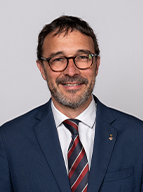
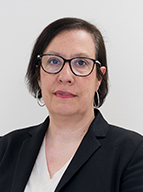
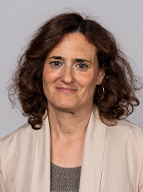
Municipal groups which must have at least two councillors, group together councillors from the same electoral list who are representing their party at the City Council.
Each municipal group is represented by a spokesperson, who is generally authorised to act in the group's name.
The Board of Spokespersons is chaired by the Mayor and made up of the spokespersons for the various municipal groups. Its function is to discuss and debate the agendas of regular Full Municipal Council Meetings and deal with issues relating to its operations.
The Mayor is the person who chairs and represents the municipal corporation.
Among other things, she is responsible for managing the Municipal government and Administration and with convening and chairing Full Municipal Council Meetings and the Municipal Government Commission.
She is also responsible for appointing deputy mayors and the municipal government's councillors, as well as organising the Executive Municipal Authority. Furthermore, she is responsible for the City Council's financial management, in accordance with its approved budget.
Barcelona is divided into ten districts, in order to decentralise its administration and provide attention for city residents locally. Each district is represented by its own District Council, along with the District Councillor and the Presiding District Councillor.
The executive structure is responsible for implementing Municipal Government and Municipal Council initiatives. Its highest executive is the Municipal Manager, who co-ordinates the municipal manager offices, along with the ten district municipal manager offices, which provide everyday municipal management to the city's 73 neighbourhoods.
The manager also supervises key City Council specialist organisations which are responsible for different thematic areas.
The executive structure is organised into manager's offices, run by the Municipal Manager, to cover all the City Council's management areas.
The Full City Council is Barcelona's highest political representative body. It meets in ordinary session every month.
The councillors are organised into various political groups and, in addition to the Council, they are also represented on the Board of Spokepersons
Municipal political groups
Groups are made up of councillors and take part in plenary debates, commissions and bodies where City Council is represented.
Board of Spokepersons
This lends support to the Full City Council Meeting and is made up of the various municipal-group spokepersons. Its main task is to discuss and debate the Municipal Council's agenda.
This consists of the Mayor and the four Deputy Mayors and it co-ordinates the various municipal government areas and lays the ground for decision making.
Barcelona is organised into ten districts. This enables it to decentralise administration and promote public participation in decision-making, insofar as it is appropriate for the specific needs of each city area.
Barcelona City Council has a series of affiliated dependent organisations for the efficient and sustainable development of its services. These are legal bodies in their own right, with their own assets, that are set up for specific purposes, taking into account economic performance and investment recovery criteria.
Creating these bodies allows us to manage certain services in an efficient and specialised manner, achieve greater management autonomy and flexibility, and objectively serve the general interest while acting in accordance with the principles of efficiency, hierarchy, decentralisation, deconcentration and coordination, in full compliance with the Constitution and the Law.
In addition, with the goal of fostering the city’s general interests and improving the quality of life of its citizens, the City Council takes part in decision-making in spheres where these may be affected and collaborates with other administrations and private bodies in areas of mutual interest or shared powers. At the same time, it directly or indirectly participates, to varying degrees, in a number of companies and is represented in different consortiums, foundations and associations.
These are municipal public bodies with their own legal personality and management independence. They are governed by administrative law and are tasked, under the operational administrative decentralisation system, with carrying out promotional activities, benefit activities and public-service management.
Local independent bodies
Public business entities
These are municipal public bodies that are tasked with carrying out activities, managing services and producing assets of public interest, subject to consideration. They are governed by private law, except when running their government bodies, exercising the administrative powers they are granted and in certain areas specifically regulated by legislation.
Public business entities
Municipal trading companies
These are companies funded entirely with municipal capital. They are trading companies created by City Council with exclusively municipal share capital, for managing services under a decentralised private-law system. They are companies governed wholly by commercial law. These companies, which the public administration runs its public services through, operate in the market under the same conditions as strictly private trading companies. Municipal-majority trading companies are companies that Barcelona City Council has a shareholding of over 50% in.
Municipal trading companies
100%
100%
100%
100%
100%
100%
100%
58,35%
100%
100%
68,85%%
Municipal-minority trading companies
Trading companies in which the City Council has a shareholding, either directly or through its subsidiary trading companies, of under 50%.
Municipal-minority trading companies
BCN Emprèn, SCR SA
27,11%
Barcelona Aparcaments Municipals, SA
40%
Barcelona Regional Agència de Desenvolupament Urbà, SA
41,18%
Barcelona Sagrera Alta Velocitat, SA
25%
Fira 2000, SA
23,15%
Habitatge Metròpolis Barcelona
25%
Consortiums
Consortiums that the City Council participates in and which are classed by the General Intervention Board of the State Administration as Barcelona City Council subsidiaries. The classification is based on various criteria, such as the number of members in government bodies and contributions made, and requires these entities to have their budgets consolidated with those of the municipal group.
Consortiums
Foundations
Foundations that the City Council participates in and which are classed by the General Intervention Board of the State Administration as Barcelona City Council subsidiaries. The classification is based on various criteria, such as the number of members in government bodies and contributions made, and requires these entities to have their budgets consolidated with those of the municipal group.
Foundations
Associations
Associations that City Council participates in and which are classed by the General Intervention Board of the State Administration as Barcelona City Council subsidiaries. The classification is based on various criteria, such as the number of members in government bodies and contributions made, and requires these entities to have their budgets consolidated with those of the municipal group.