Logo of Barcelona City Council

Select language

  • Català
  • Castellano
  • English

Other Barcelona City Council websites

The City Council
Contact
Procedures
Work at the City Council
News
Agenda
Map
Getting there
Skip to main content

Arxiu Municipal de Barcelona

Home
Menu navigation instructions

Instructions for screen readers and keyboard users

This menu requires arrow keys to be able to use it. The menu has up to three levels:

  • First level: main menu options
  • Second level: sub-options for elements from the first level
  • Third level: sub-options for elements from the second level

Browsing instructions:

  • Browse using the horizontal arrow keys on the first level of the menu.
  • Display and browse on the second level using the vertical arrow keys.
  • Use the Escape key to get back to the first level.
  • Use the right arrow key to display the third level.
  • Browse the third level by using the vertical arrow keys.
  • Use the Escape key to get back to the second level.
  • Alternatively, use the Enter key to display any level.
  • About us
    About us
    • Who we are
    • How we are organised
      • How we are organised
      • How we are organised
      • Archives Master Plan
      • Annual reports
      • Rights and commitments
    • History of the Archives
      • History of the Archives
      • History of the Archives
      • Medieval origins
      • Historical and administrative fonds
      • Archives Organisation Project
      • Change of century
    • Information and opening times
    • How to get there
    • Archive centers
    • Collaborate with us
  • Consult
    Consult
    • Consult the documents
    • FAQ
  • Services
    Services
    • Personalised advice
    • Reproduction of documents
    • Training and dissemination activities
    • City Council service
  • Activities and dissemination
    Activities and dissemination
    • Find out about our activities
    • Guided visits
    • Virtual exhibitions
    • Publications
    • Archive itineraries
    • International Archives Week
    • Educational activities
    • Learn with the Archives
    • Research conference
  • Records management
    Records management
    • Summary of records
    • Classification frameworks
    • Description method
    • Municipal Commission on Records Access and Appraisal
    • Conservation and access calendar
    • e-Government
    • Rules and regulations
Menu navigation instructions

Instructions for keyboard users

This menu requires arrow keys to be able to use it. The menu has up to three levels:

  • First level: main menu options
  • Second level: sub-options for elements from the first level
  • Third level: sub-options for elements from the second level

Browsing instructions:

  • Browse using the vertical arrow keys on the first level of the menu.
  • Use the right arrow key to display the second level.
  • Browse on the second level using the vertical arrow keys.
  • Use the Escape key to get back to the first level.
  • Use the right arrow key to display the third level.
  • Browse the third level by using the vertical arrow keys.
  • Use the Escape key to get back to the second level.
  • Alternatively, use the Enter key to display any level.
  • About us
    About us
    • Who we are
    • How we are organised
      • How we are organised
      • How we are organised
      • Archives Master Plan
      • Annual reports
      • Rights and commitments
    • History of the Archives
      • History of the Archives
      • History of the Archives
      • Medieval origins
      • Historical and administrative fonds
      • Archives Organisation Project
      • Change of century
    • Information and opening times
    • How to get there
    • Archive centers
    • Collaborate with us
  • Consult
    Consult
    • Consult the documents
    • FAQ
  • Services
    Services
    • Personalised advice
    • Reproduction of documents
    • Training and dissemination activities
    • City Council service
  • Activities and dissemination
    Activities and dissemination
    • Find out about our activities
    • Guided visits
    • Virtual exhibitions
    • Publications
    • Archive itineraries
    • International Archives Week
    • Educational activities
    • Learn with the Archives
    • Research conference
  • Records management
    Records management
    • Summary of records
    • Classification frameworks
    • Description method
    • Municipal Commission on Records Access and Appraisal
    • Conservation and access calendar
    • e-Government
    • Rules and regulations

District Municipal Archive of Nou Barris

  • History of the Archive
  • What records do we keep?
  • Educational activities
    • Get to know the Nou Barris District Municipal Archives
    • Itinerary through Nou Barris. Verdum and La Prosperitat: work life and local-resident protests
  • Publications
  • Where to find us
  1. Home
  2. / District Municipal Archives
  3. / Nou Barris

History of the Archive

A “madhouse” turned into an archives.

The Institut Mental de la Santa Creu i Sant Pau opened on 19 November 1889, with the aim of providing mentally ill people with the best possible assistance in the city and training new psychiatrists. The main promoters of this mental asylum were Dr Emili Pi i Molist, then its director, and Archbishop Josep Oriol i Bernardet. Both worked on the project between 1855 and 1860, taking the best psychiatrist in Western Europe as their model.

The asylum, located between Horta and Sant Andreu, in the old village of Sant Andreu del Palomar in the grounds of a large estate called Can Amell Xic, was an enormous building, 600 metres long by 250 wide.

However, during the 1960s, it began to fall into decline. Several pavilions were knocked down to build the Barcinova and Calinova estates, before the last patients left in 1987.

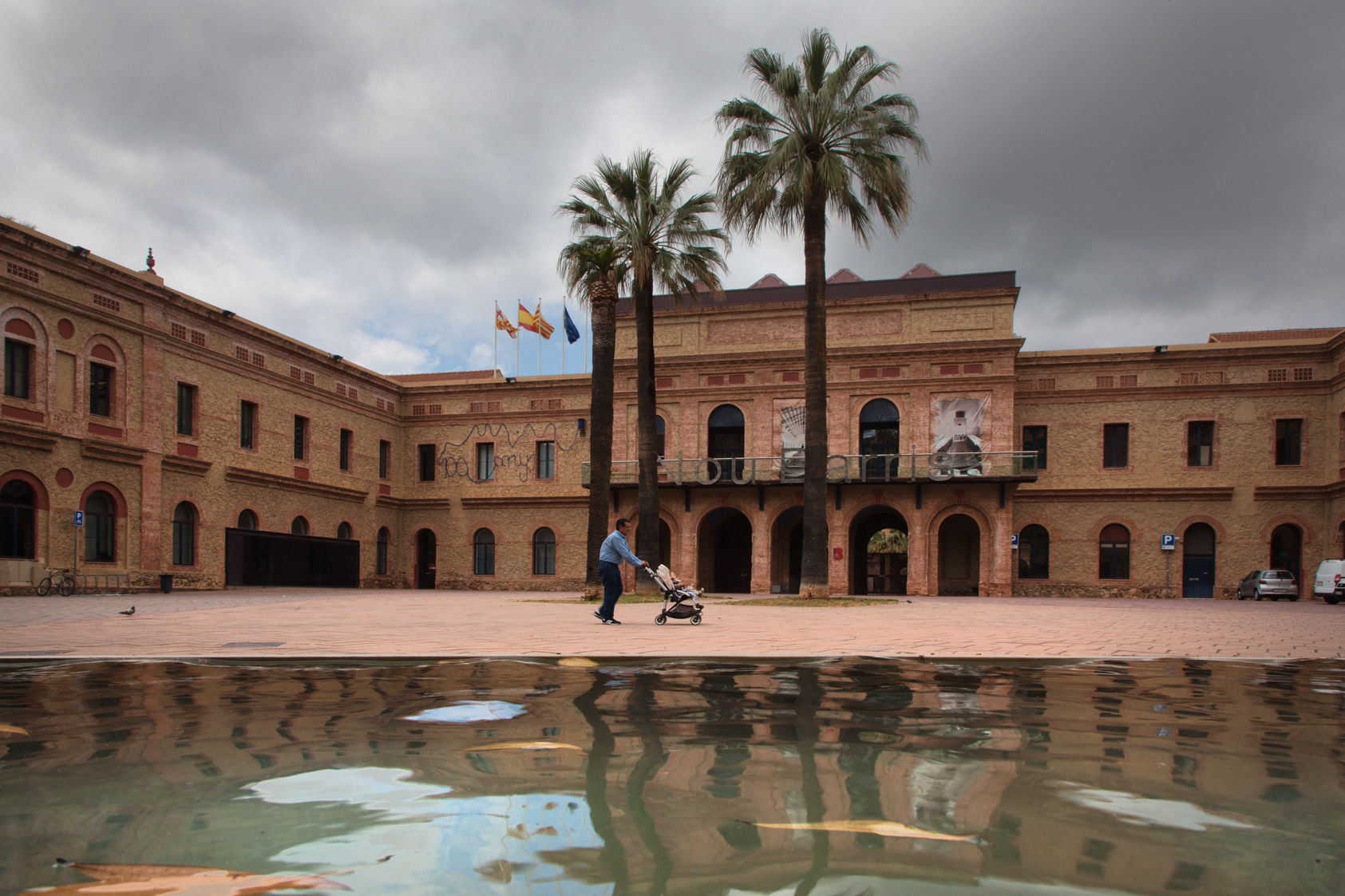
The Nou Barris Archives occupied part of the building that houses the District Municipal Council until 1995, a side wing where the Nou Barris Library was built later. These days, the Archives' facilities are on the first floor of the building.

Apart from the Municipal Archives and other municipal services, the three remaining pavilions house the Nou Barris District headquarters, the library and the Guàrdia Urbana police barracks.
Note for screen reader users. This gallery shows one element, which can be an image or a video. Use the controls from the ‘Gallery Controls’ area to show the previous or the next element. You can also click on the element you wish to visualise.
Image of a two-storey brick building, with a central body comprising a balcony and an entrance porch, which leads to a square with palm trees and a pond by which a person is walking.

Since its establishment in 1989, the AMDNB has been located in the main offices of the District Municipal Council, in the old Santa Creu Mental Institute. Carme García Navarro

Slide 1 of 1
Barcelona City Council logo
  • Accessibility
  • Legal notice
  • Contact us