Logo of Barcelona City Council

Select language

  • Català
  • Castellano
  • English

Other Barcelona City Council websites

The City Council
Contact
Procedures
Work at the City Council
News
Agenda
Map
Getting there
Skip to main content

Arxiu Municipal de Barcelona

Home
Menu navigation instructions

Instructions for screen readers and keyboard users

This menu requires arrow keys to be able to use it. The menu has up to three levels:

  • First level: main menu options
  • Second level: sub-options for elements from the first level
  • Third level: sub-options for elements from the second level

Browsing instructions:

  • Browse using the horizontal arrow keys on the first level of the menu.
  • Display and browse on the second level using the vertical arrow keys.
  • Use the Escape key to get back to the first level.
  • Use the right arrow key to display the third level.
  • Browse the third level by using the vertical arrow keys.
  • Use the Escape key to get back to the second level.
  • Alternatively, use the Enter key to display any level.
  • About us
    About us
    • Who we are
    • How we are organised
      • How we are organised
      • How we are organised
      • Archives Master Plan
      • Annual reports
      • Rights and commitments
    • History of the Archives
      • History of the Archives
      • History of the Archives
      • Medieval origins
      • Historical and administrative fonds
      • Archives Organisation Project
      • Change of century
    • Information and opening times
    • How to get there
    • Archive centers
    • Collaborate with us
  • Consult
    Consult
    • Consult the documents
    • FAQ
  • Services
    Services
    • Personalised advice
    • Reproduction of documents
    • Training and dissemination activities
    • City Council service
  • Activities and dissemination
    Activities and dissemination
    • Find out about our activities
    • Guided visits
    • Virtual exhibitions
    • Publications
    • Archive itineraries
    • International Archives Week
    • Educational activities
    • Learn with the Archives
    • Research conference
  • Records management
    Records management
    • Summary of records
    • Classification frameworks
    • Description method
    • Municipal Commission on Records Access and Appraisal
    • Conservation and access calendar
    • e-Government
    • Rules and regulations
Menu navigation instructions

Instructions for keyboard users

This menu requires arrow keys to be able to use it. The menu has up to three levels:

  • First level: main menu options
  • Second level: sub-options for elements from the first level
  • Third level: sub-options for elements from the second level

Browsing instructions:

  • Browse using the vertical arrow keys on the first level of the menu.
  • Use the right arrow key to display the second level.
  • Browse on the second level using the vertical arrow keys.
  • Use the Escape key to get back to the first level.
  • Use the right arrow key to display the third level.
  • Browse the third level by using the vertical arrow keys.
  • Use the Escape key to get back to the second level.
  • Alternatively, use the Enter key to display any level.
  • About us
    About us
    • Who we are
    • How we are organised
      • How we are organised
      • How we are organised
      • Archives Master Plan
      • Annual reports
      • Rights and commitments
    • History of the Archives
      • History of the Archives
      • History of the Archives
      • Medieval origins
      • Historical and administrative fonds
      • Archives Organisation Project
      • Change of century
    • Information and opening times
    • How to get there
    • Archive centers
    • Collaborate with us
  • Consult
    Consult
    • Consult the documents
    • FAQ
  • Services
    Services
    • Personalised advice
    • Reproduction of documents
    • Training and dissemination activities
    • City Council service
  • Activities and dissemination
    Activities and dissemination
    • Find out about our activities
    • Guided visits
    • Virtual exhibitions
    • Publications
    • Archive itineraries
    • International Archives Week
    • Educational activities
    • Learn with the Archives
    • Research conference
  • Records management
    Records management
    • Summary of records
    • Classification frameworks
    • Description method
    • Municipal Commission on Records Access and Appraisal
    • Conservation and access calendar
    • e-Government
    • Rules and regulations

District Municipal Archive of Gràcia

  • History of the Archive
  • What records do we keep?
    • Private Works Licenses
  • Educational activities
    • Get to know the Gràcia District Municipal Archives
    • The Annual Festival. Games, snacks and traditional dances in the Gràcia of yesteryear
    • The Gràcia tramway system
    • The underground water network of Vila de Gràcia
    • Itinerary through Gràcia: cultural life and the associations movement in Vila de Gràcia
  • Teaching resources
    • What was the metro like before?
    • A mysterious disappearance
    • And the bombs rained down
    • When there is nothing to eat
    • Long live the war
  • Publications
  • Where to find us
  1. Home
  2. / District Municipal Archives
  3. / Gràcia

History of the Archive

An artwork

The bases for a historical archive in the Gràcia neighbourhood began to be laid in 1983, following a number of District Municipal Council initiatives. Meanwhile but independently of that, the Club Excursionista de Gràcia, a local hiking club, had been compiling a large number of historical Gràcia documents since 1927 that formed what was known as the Gràcia Archives.

So, around the Barcelona City Council Archives Organisation Project, the Gràcia District Municipal Archives was set up in 1988 and was subsequently located in different places. The first was a small space at the District Municipal Council headquarters in Plaça de Rius i Taulet (today Plaça de la Vila de Gràcia).

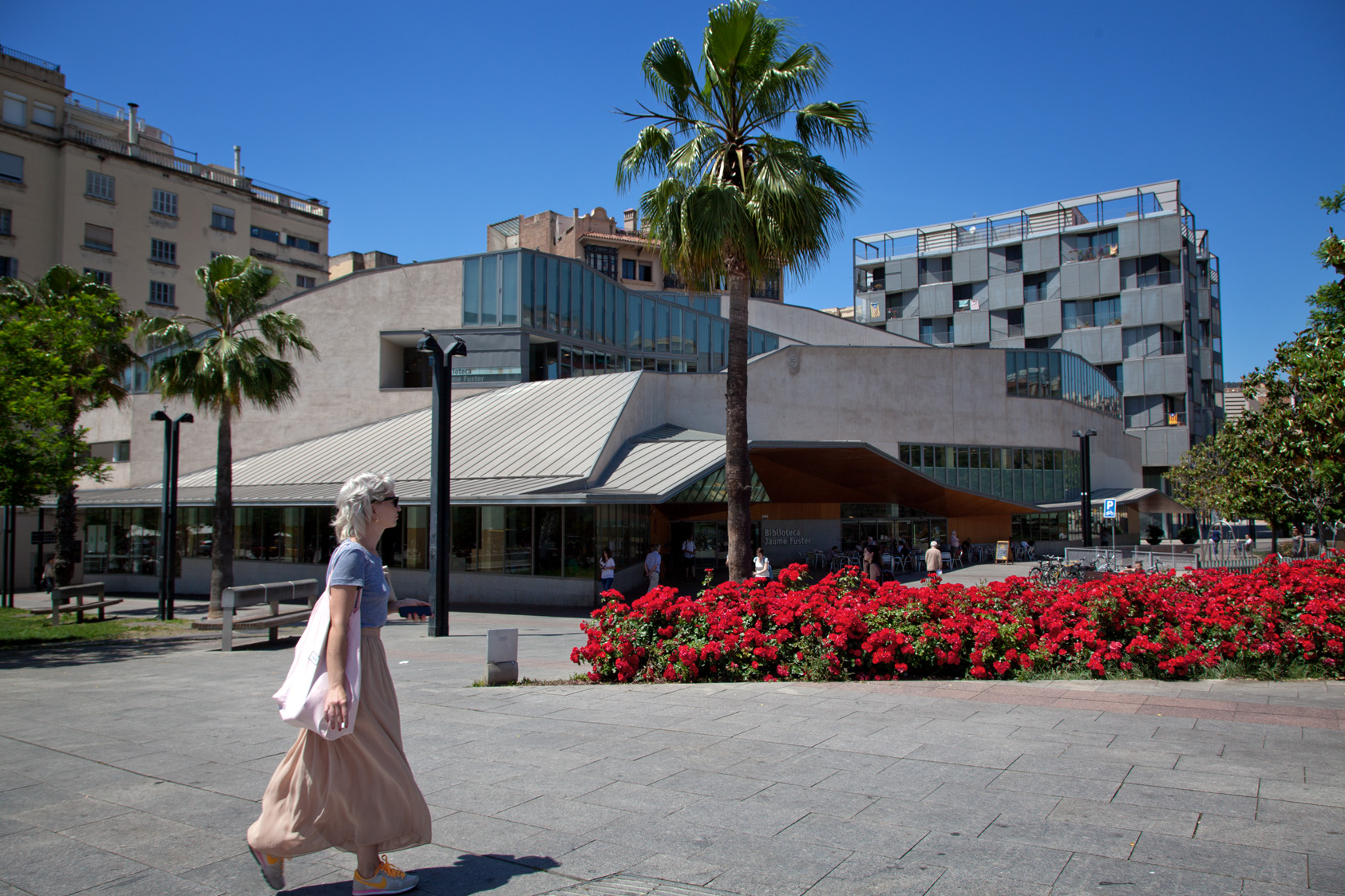
Then, in 1991, they were moved to a single-storey “town house” and garden built in the early years of the 20th century on Carrer de les Camèlies, which had been remodelled and adapted to the needs of an archive centre. However, given the limitations of the existing space and the growth of the fonds, a decision was eventually taken to move the archives to the emblematic Jaume Fuster Library building, designed by the architect Josep Antoni Llinàs i Carmona and inaugurated on 13 November 2005. This work won the Foment de les Arts Decoratives (FAD) Award for Architecture in 2006.
Note for screen reader users. This gallery shows one element, which can be an image or a video. Use the controls from the ‘Gallery Controls’ area to show the previous or the next element. You can also click on the element you wish to visualise.
View of the Jaume Fuster building, which accommodates the AMDG and the Gràcia district library, with flower beds and palm trees in front and people walking through the square.

Since 2006, the AMDG has been located in the Jaume Fuster building which it shares with the district library. Carme García Navarro

Slide 1 of 1
Barcelona City Council logo
  • Accessibility
  • Legal notice
  • Contact us