Logo of Barcelona City Council

Select language

  • Català
  • Castellano
  • English

Other Barcelona City Council websites

The City Council
Contact
Procedures
Work at the City Council
News
Agenda
Map
Getting there
Skip to main content

Espais Verds

Home
Menu navigation instructions

Instructions for screen readers and keyboard users

This menu requires arrow keys to be able to use it. The menu has up to three levels:

  • First level: main menu options
  • Second level: sub-options for elements from the first level
  • Third level: sub-options for elements from the second level

Browsing instructions:

  • Browse using the horizontal arrow keys on the first level of the menu.
  • Display and browse on the second level using the vertical arrow keys.
  • Use the Escape key to get back to the first level.
  • Use the right arrow key to display the third level.
  • Browse the third level by using the vertical arrow keys.
  • Use the Escape key to get back to the second level.
  • Alternatively, use the Enter key to display any level.
  • The Institute
    The Institute
    • Municipal Institute of Parks and Gardens
      • Municipal Institute of Parks and Gardens
      • Municipal Institute of Parks and Gardens
      • Institutional information
      • Reporting channel
      • Work at the parks
      • Strategic plans
  • Parks and gardens
    Parks and gardens
    • The parks and gardens of Barcelona
      • The parks and gardens of Barcelona
      • The parks and gardens of Barcelona
      • Rules on the use of green spaces
      • Plant palette
      • Routes and tours
    • Services
      • Services
      • Services
      • Children’s play areas
      • Recreation areas for dogs
      • Other services
    • Flora and fauna
      • Flora and fauna
      • Flora and fauna
      • Biodiversity Atlas
      • Trees of local interest
      • Conservation of flora and fauna
      • Conservation of protected wildlife
      • Invasive and problematic species
    • Other green spaces
  • Participate
    Participate
    • Introduction
    • Get Green
      • Get Green
      • Get Green
      • Municipal Allotment Network
      • Cession of municipal spaces
      • Look after your tree pit
      • Co-management of public spaces
      • Urban Agriculture Observatory
    • El Laberint Training Centre
    • Greenery at home, too
    • Annual activities
      • Annual activities
      • Annual activities
      • International Roses Competition 2025
      • International New Rose Competition
      • Spring festival
      • Barcelona Espigola
    • School activities
  • Management and maintenance
    Management and maintenance
    • Management of green spaces
      • Management of green spaces
      • Management of green spaces
      • Types of vegetation
      • Ecological management and naturalisation
      • Tree management
      • How does climate change affect us?
      • Renaturalisation
      • Trees and climate change
    • Management of pests and diseases
      • Management of pests and diseases
      • Management of pests and diseases
      • Integrated management of pests and diseases
      • Phytosanitary treatments
  • News
Menu navigation instructions

Instructions for keyboard users

This menu requires arrow keys to be able to use it. The menu has up to three levels:

  • First level: main menu options
  • Second level: sub-options for elements from the first level
  • Third level: sub-options for elements from the second level

Browsing instructions:

  • Browse using the vertical arrow keys on the first level of the menu.
  • Use the right arrow key to display the second level.
  • Browse on the second level using the vertical arrow keys.
  • Use the Escape key to get back to the first level.
  • Use the right arrow key to display the third level.
  • Browse the third level by using the vertical arrow keys.
  • Use the Escape key to get back to the second level.
  • Alternatively, use the Enter key to display any level.
  • The Institute
    The Institute
    • Municipal Institute of Parks and Gardens
      • Municipal Institute of Parks and Gardens
      • Municipal Institute of Parks and Gardens
      • Institutional information
      • Reporting channel
      • Work at the parks
      • Strategic plans
  • Parks and gardens
    Parks and gardens
    • The parks and gardens of Barcelona
      • The parks and gardens of Barcelona
      • The parks and gardens of Barcelona
      • Rules on the use of green spaces
      • Plant palette
      • Routes and tours
    • Services
      • Services
      • Services
      • Children’s play areas
      • Recreation areas for dogs
      • Other services
    • Flora and fauna
      • Flora and fauna
      • Flora and fauna
      • Biodiversity Atlas
      • Trees of local interest
      • Conservation of flora and fauna
      • Conservation of protected wildlife
      • Invasive and problematic species
    • Other green spaces
  • Participate
    Participate
    • Introduction
    • Get Green
      • Get Green
      • Get Green
      • Municipal Allotment Network
      • Cession of municipal spaces
      • Look after your tree pit
      • Co-management of public spaces
      • Urban Agriculture Observatory
    • El Laberint Training Centre
    • Greenery at home, too
    • Annual activities
      • Annual activities
      • Annual activities
      • International Roses Competition 2025
      • International New Rose Competition
      • Spring festival
      • Barcelona Espigola
    • School activities
  • Management and maintenance
    Management and maintenance
    • Management of green spaces
      • Management of green spaces
      • Management of green spaces
      • Types of vegetation
      • Ecological management and naturalisation
      • Tree management
      • How does climate change affect us?
      • Renaturalisation
      • Trees and climate change
    • Management of pests and diseases
      • Management of pests and diseases
      • Management of pests and diseases
      • Integrated management of pests and diseases
      • Phytosanitary treatments
  • News
  1. Home
  2. / Management and maintenance
  3. / Management of green spaces

Trees and climate change

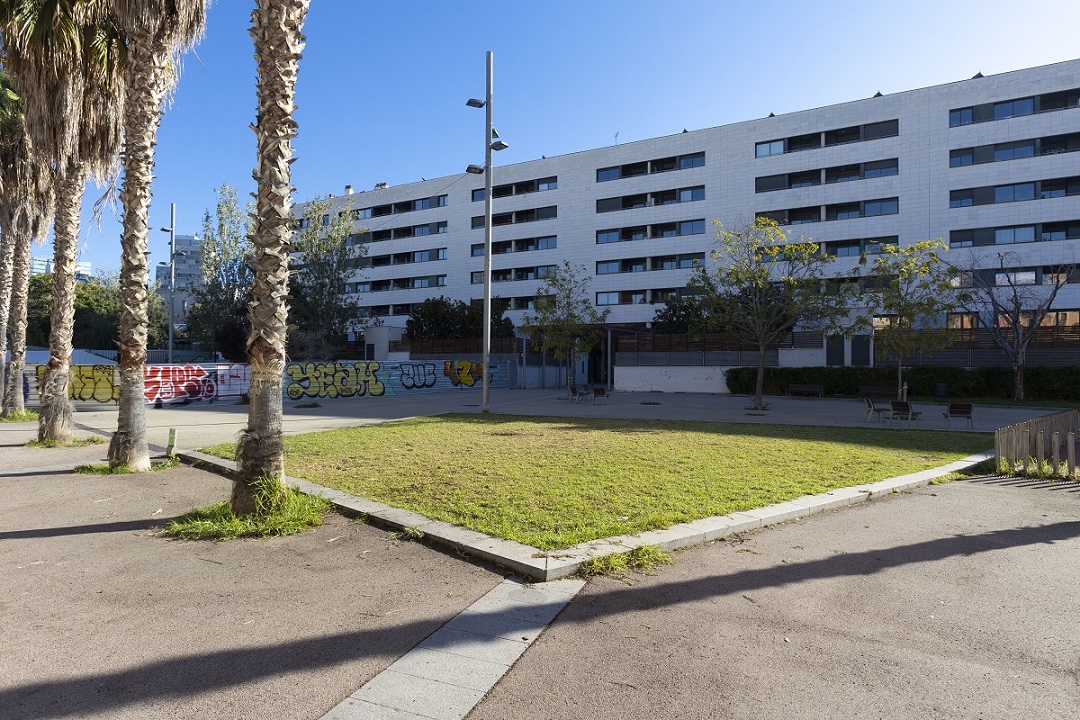
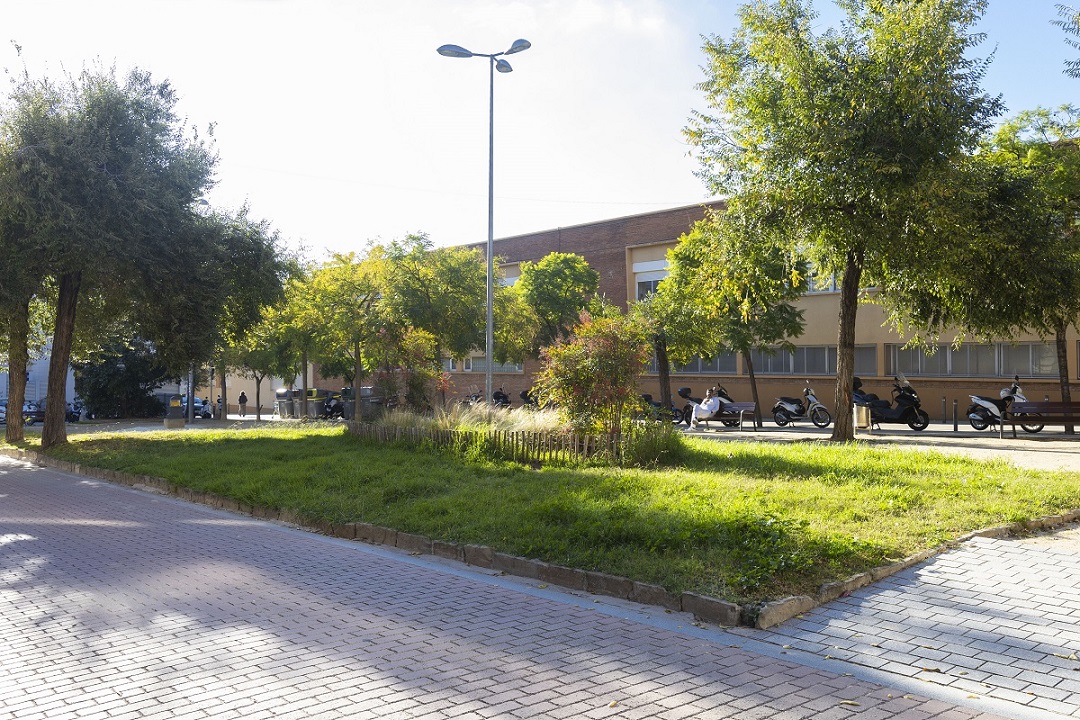
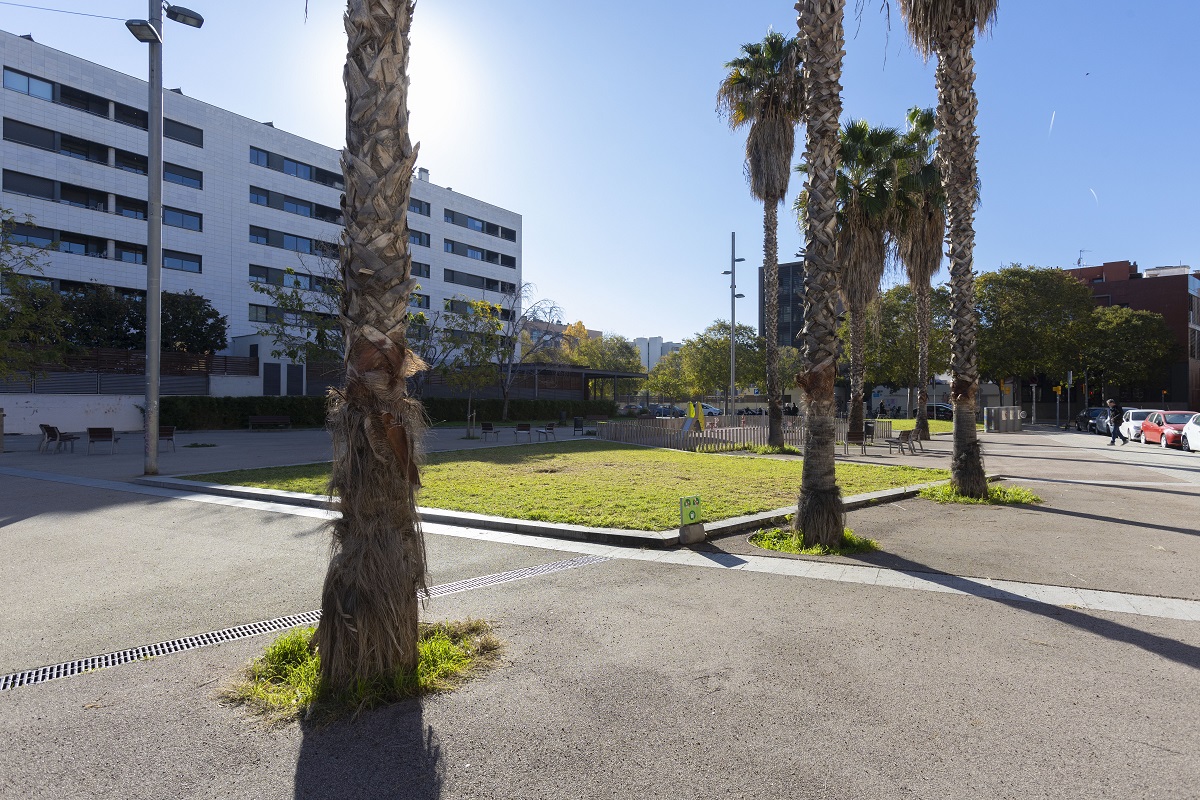
Note for screen reader users. This gallery shows two elements simultaneously, which can be images or videos. Use the controls to show the previous or the next element.
Climate change is leading to ever more frequent extreme weather phenomena, such as long droughts or torrential rains, which directly affect the green areas of Barcelona and test the resistance of urban trees.
The Municipal Institute of Parks and Gardens of Barcelona, ​​in collaboration with the Fondazione Capellino (the foundation promoting and financing the project) and CREAF, has signed an agreement to study the environmental benefits of different tree species. The study will be carried out through the compilation and evaluation of data on the ground, with the aim of identifying which species and types of soil show greater resilience and capacity to adapt to the urban environment of Barcelona.    

What does the project consist of?

The new climate reality resulting from global warming means that urban trees have to face increasingly adverse conditions, which can compromise both their ability to provide essential environmental services, such as shade or space for leisure, as well as their own survival. Faced with this scenario, it is essential to rethink the selection of tree species and review the planting and maintenance methods used in the urban environment.

The aim of the project is to analyse to what extent two new tree species – Zelkova serrata and Pistacia chinensis – can adapt to the urban conditions of Barcelona and contribute to the provision of essential ecosystem services. The two selected species have been chosen taking into account various characteristics such as climate and environmental resistance, benefits to the ecosystem and sustainable management, with the aim of guaranteeing their successful integration into the urban environment. They are also noted for their aesthetic and social value, and their low allergenic potential, which favours the quality of life of citizens.

This evaluation aims to serve as a basis for encouraging their incorporation into the urban environment, in order to strengthen the resilience of the city's green spaces and the well-being of the population.

Image
Image
Image

Phases of the project

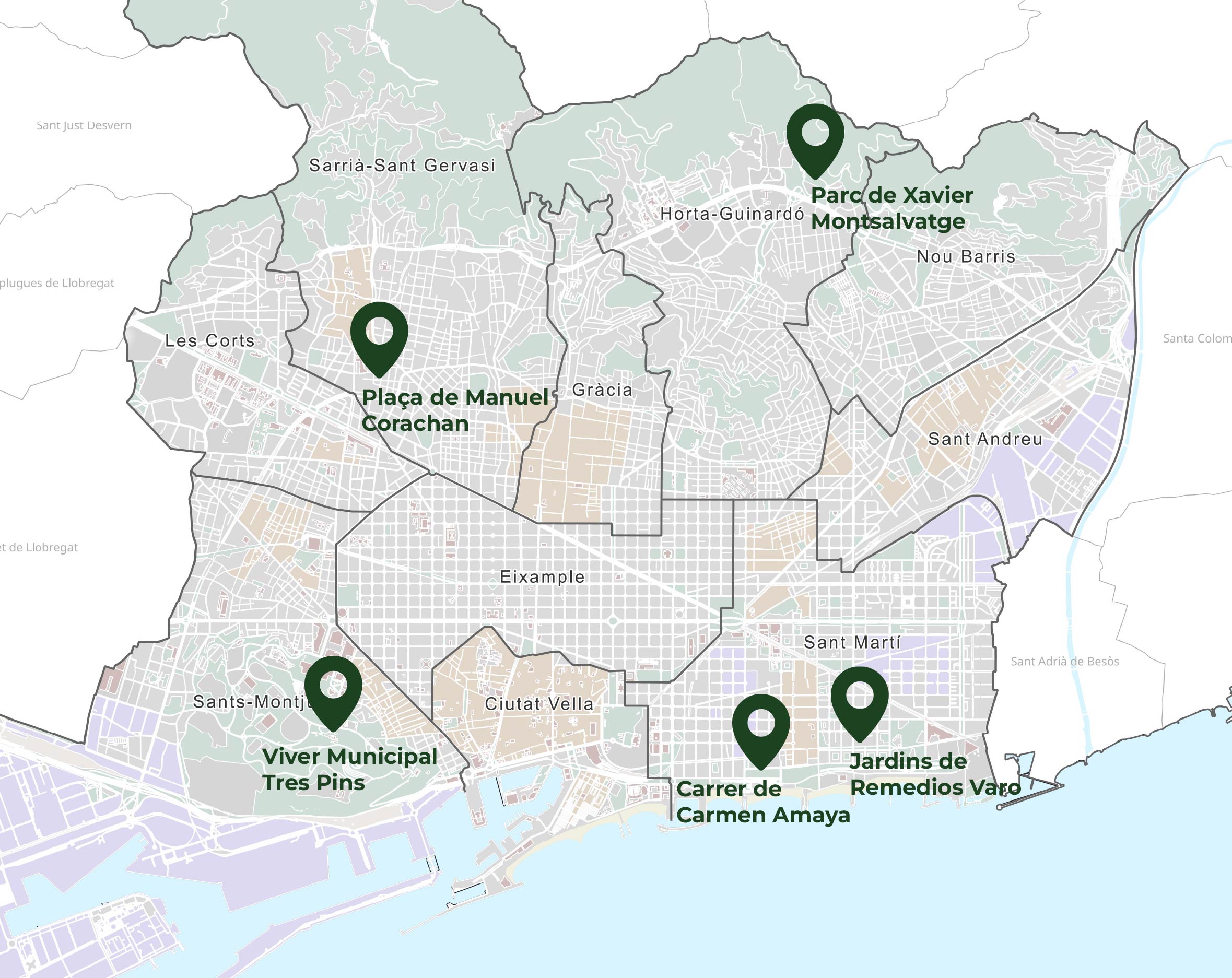
  1. Tree planting: 25 specimens of each of these species (Zelkova serrata and Pistacia chinensis) will be planted in four city gardens and in the municipal nursery. In total, 50 trees, 10 in each selected area.
  2. 5 intervention areas: 4 urban parks and 1 tree nursery, selected for the diversity of their geographical and climatic conditions.
  3. Installation of sensors: specialised sensors will be installed on the planted specimens, which will provide detailed data on their status throughout the four years of the project.
  4. Measurements from the sensors: the sensors will continuously follow the growth of the diameter of the trunks, the temperature and the ambient humidity, the quality of the air and the humidity of the soil.
  5. Analysis of the collected data: the data collected will be analysed to evaluate the adaptability of the studied species to the various urban conditions and determine their environmental influence on the surrounding area. This will help us to assess whether they are suitable for future planting in the streets, parks and gardens of Barcelona.
Image

Barcelona City Council logo
  • Sitemap
  • Legal notice
  • Accessibility