Logo of Barcelona City Council

Select language

  • Català
  • Castellano
  • English

Other Barcelona City Council websites

The City Council
Contact
Procedures
Work at the City Council
News
Agenda
Map
Getting there
Skip to main content

Espais Verds

Home
Menu navigation instructions

Instructions for screen readers and keyboard users

This menu requires arrow keys to be able to use it. The menu has up to three levels:

  • First level: main menu options
  • Second level: sub-options for elements from the first level
  • Third level: sub-options for elements from the second level

Browsing instructions:

  • Browse using the horizontal arrow keys on the first level of the menu.
  • Display and browse on the second level using the vertical arrow keys.
  • Use the Escape key to get back to the first level.
  • Use the right arrow key to display the third level.
  • Browse the third level by using the vertical arrow keys.
  • Use the Escape key to get back to the second level.
  • Alternatively, use the Enter key to display any level.
  • The Institute
    The Institute
    • Municipal Institute of Parks and Gardens
      • Municipal Institute of Parks and Gardens
      • Municipal Institute of Parks and Gardens
      • Institutional information
      • Reporting channel
      • Work at the parks
      • Strategic plans
  • Parks and gardens
    Parks and gardens
    • The parks and gardens of Barcelona
      • The parks and gardens of Barcelona
      • The parks and gardens of Barcelona
      • Rules on the use of green spaces
      • Plant palette
      • Routes and tours
    • Services
      • Services
      • Services
      • Children’s play areas
      • Recreation areas for dogs
      • Other services
    • Flora and fauna
      • Flora and fauna
      • Flora and fauna
      • Biodiversity Atlas
      • Trees of local interest
      • Conservation of flora and fauna
      • Conservation of protected wildlife
      • Invasive and problematic species
    • Other green spaces
  • Participate
    Participate
    • Introduction
    • Get Green
      • Get Green
      • Get Green
      • Municipal Allotment Network
      • Cession of municipal spaces
      • Look after your tree pit
      • Co-management of public spaces
      • Urban Agriculture Observatory
    • El Laberint Training Centre
    • Greenery at home, too
    • Annual activities
      • Annual activities
      • Annual activities
      • International Roses Competition 2025
      • International New Rose Competition
      • Spring festival
      • Barcelona Espigola
    • School activities
  • Management and maintenance
    Management and maintenance
    • Management of green spaces
      • Management of green spaces
      • Management of green spaces
      • Types of vegetation
      • Ecological management and naturalisation
      • Tree management
      • How does climate change affect us?
      • Renaturalisation
    • Management of pests and diseases
      • Management of pests and diseases
      • Management of pests and diseases
      • Integrated management of pests and diseases
      • Phytosanitary treatments
  • News
Menu navigation instructions

Instructions for keyboard users

This menu requires arrow keys to be able to use it. The menu has up to three levels:

  • First level: main menu options
  • Second level: sub-options for elements from the first level
  • Third level: sub-options for elements from the second level

Browsing instructions:

  • Browse using the vertical arrow keys on the first level of the menu.
  • Use the right arrow key to display the second level.
  • Browse on the second level using the vertical arrow keys.
  • Use the Escape key to get back to the first level.
  • Use the right arrow key to display the third level.
  • Browse the third level by using the vertical arrow keys.
  • Use the Escape key to get back to the second level.
  • Alternatively, use the Enter key to display any level.
  • The Institute
    The Institute
    • Municipal Institute of Parks and Gardens
      • Municipal Institute of Parks and Gardens
      • Municipal Institute of Parks and Gardens
      • Institutional information
      • Reporting channel
      • Work at the parks
      • Strategic plans
  • Parks and gardens
    Parks and gardens
    • The parks and gardens of Barcelona
      • The parks and gardens of Barcelona
      • The parks and gardens of Barcelona
      • Rules on the use of green spaces
      • Plant palette
      • Routes and tours
    • Services
      • Services
      • Services
      • Children’s play areas
      • Recreation areas for dogs
      • Other services
    • Flora and fauna
      • Flora and fauna
      • Flora and fauna
      • Biodiversity Atlas
      • Trees of local interest
      • Conservation of flora and fauna
      • Conservation of protected wildlife
      • Invasive and problematic species
    • Other green spaces
  • Participate
    Participate
    • Introduction
    • Get Green
      • Get Green
      • Get Green
      • Municipal Allotment Network
      • Cession of municipal spaces
      • Look after your tree pit
      • Co-management of public spaces
      • Urban Agriculture Observatory
    • El Laberint Training Centre
    • Greenery at home, too
    • Annual activities
      • Annual activities
      • Annual activities
      • International Roses Competition 2025
      • International New Rose Competition
      • Spring festival
      • Barcelona Espigola
    • School activities
  • Management and maintenance
    Management and maintenance
    • Management of green spaces
      • Management of green spaces
      • Management of green spaces
      • Types of vegetation
      • Ecological management and naturalisation
      • Tree management
      • How does climate change affect us?
      • Renaturalisation
    • Management of pests and diseases
      • Management of pests and diseases
      • Management of pests and diseases
      • Integrated management of pests and diseases
      • Phytosanitary treatments
  • News
  1. Home
  2. / Parks and gardens
  3. / Services

Children’s play areas
Note for screen reader users. This gallery shows two elements simultaneously, which can be images or videos. Use the controls to show the previous or the next element.

How do we play?

We want to know how people play in the city’s play areas. We want to know your opinion about these places and gather qualitative as well as quantitative data on the uses made of them. 

Help us to improve play areas in Barcelona. Surveys are anonymous and only take five minutes! 

Complete the survey

Come and play!

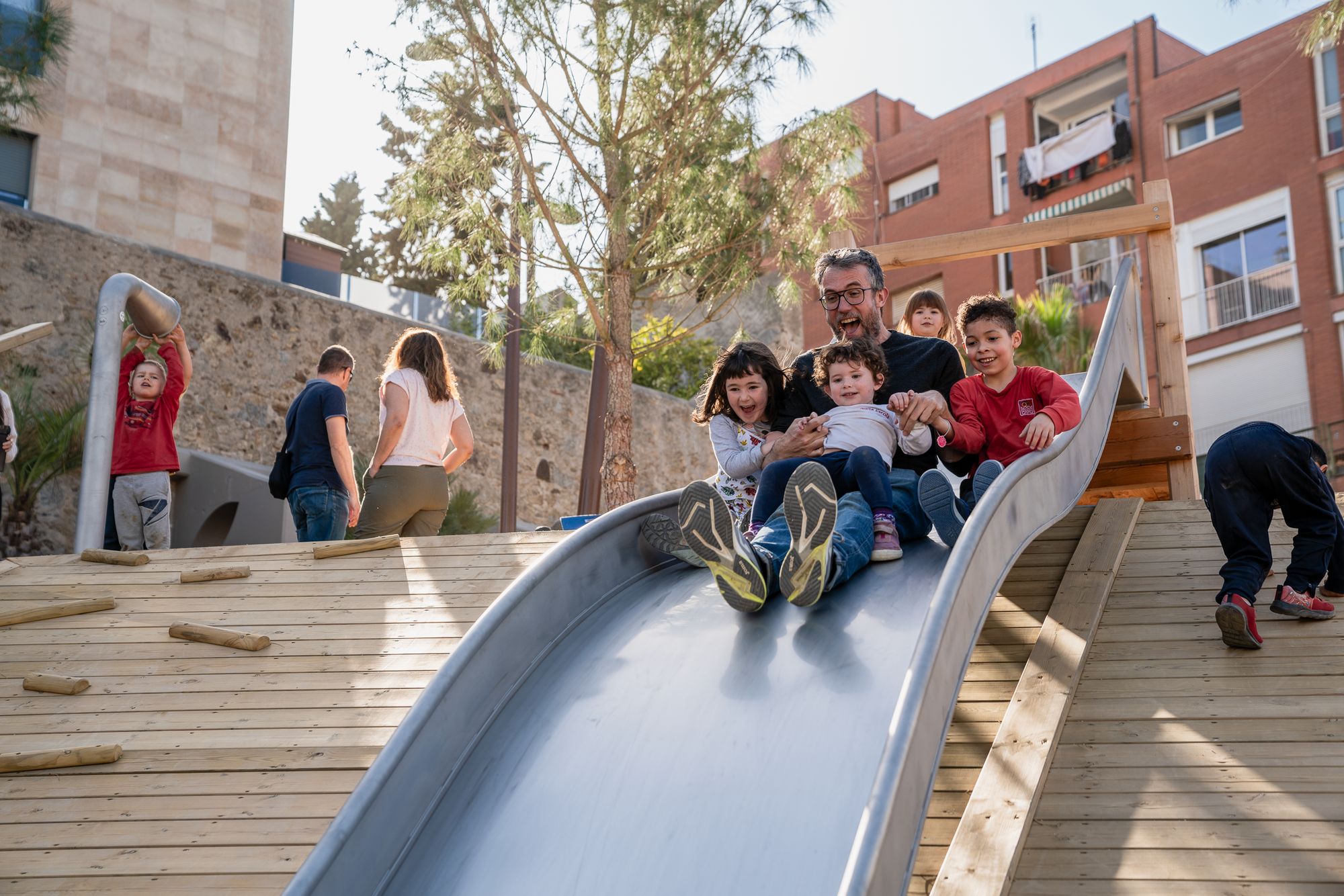
Playing is not only fun, it is also essential for the integral development of children. 

Children explore, learn, communicate and develop physical, emotional, social and intellectual skills through play. This is why it is essential that every child has sufficient space to play, especially in the open air.

The Barcelona play area network

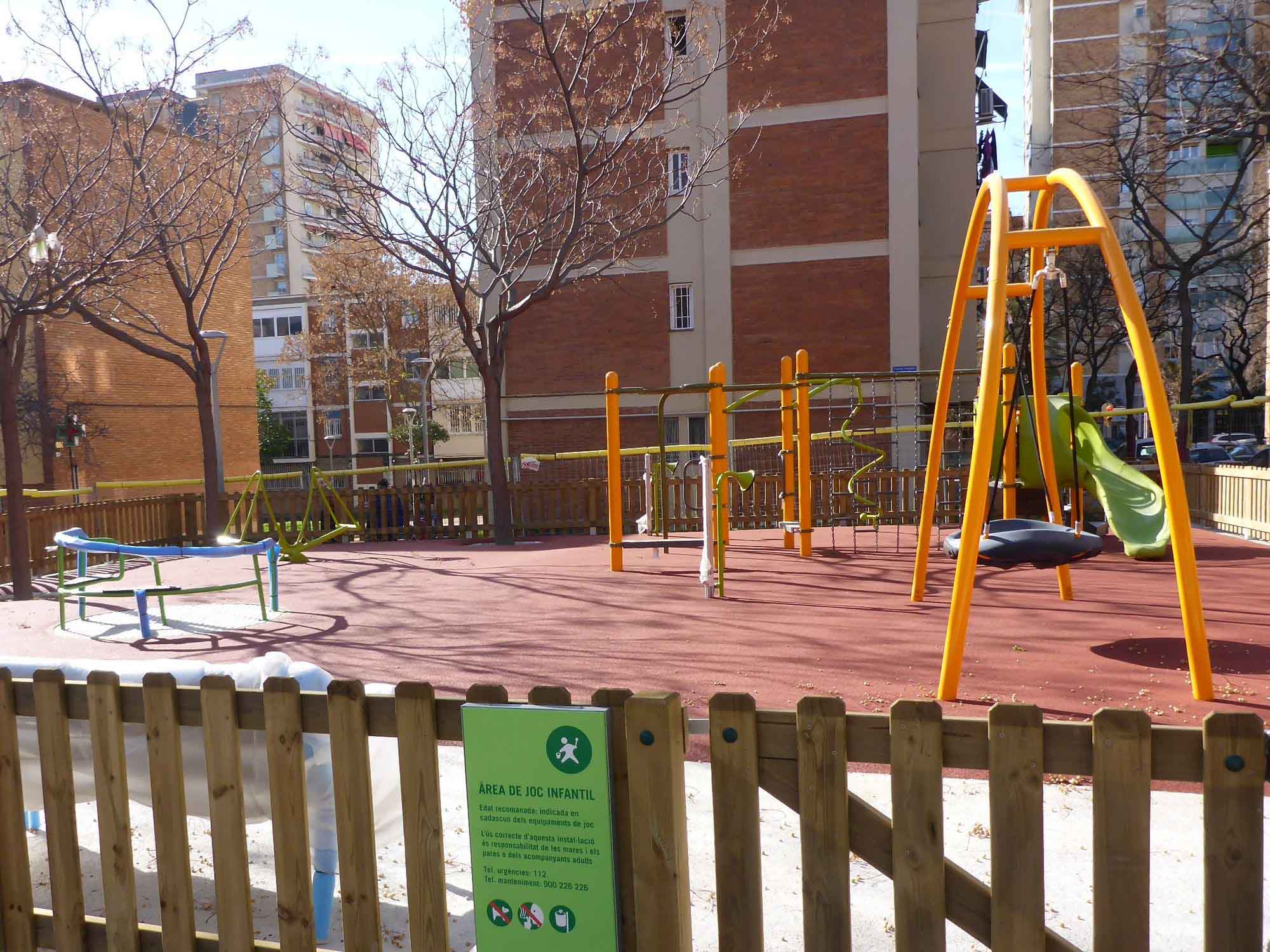
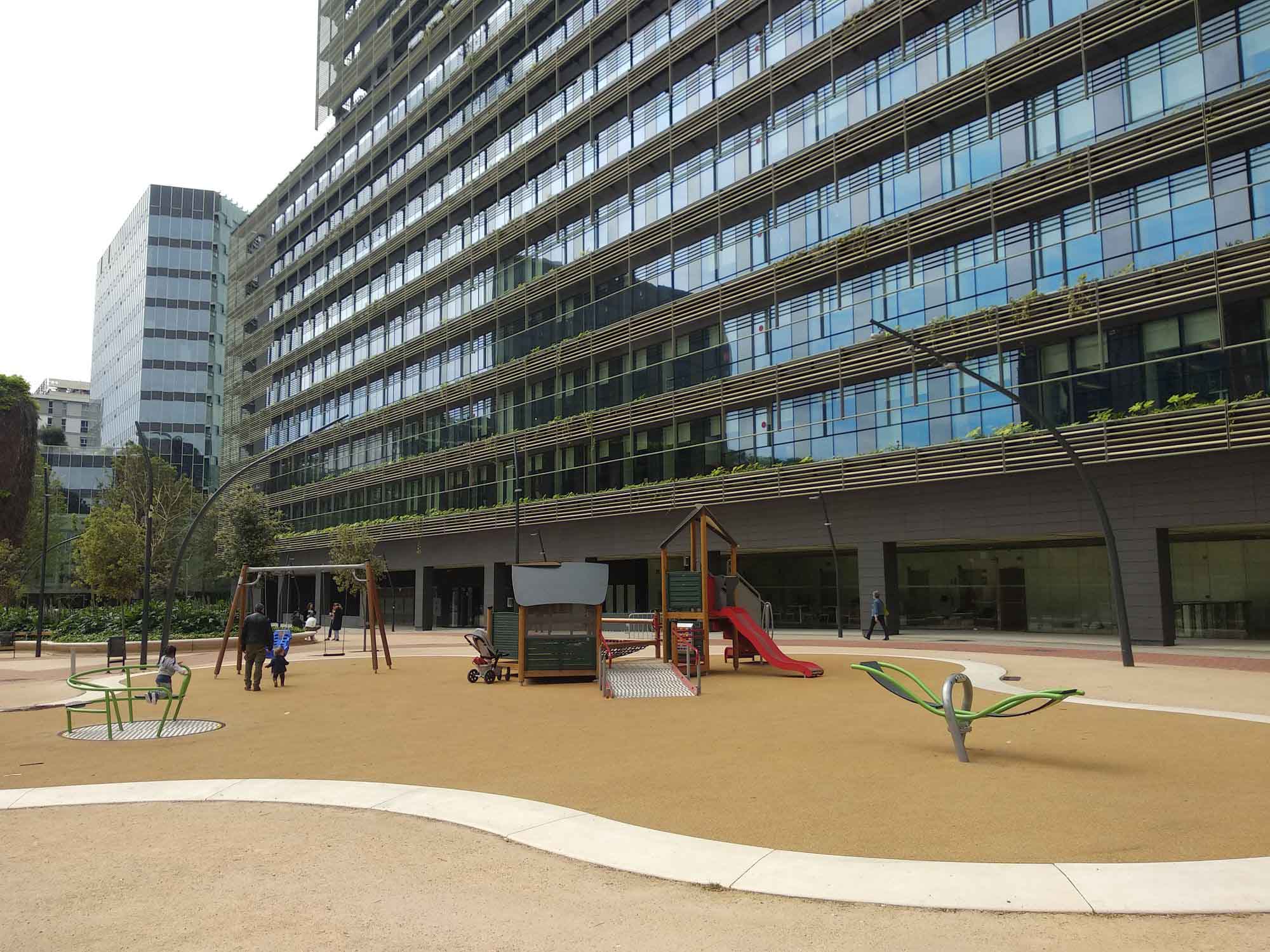
Barcelona has almost 900 spaces dedicated to children's play areas, distributed throughout parks, gardens and squares. These spaces vary in shape and size, but they all share a design based on safety, sociability and equitable distribution, and have a uniform quality. 

Where are they?

If you want to find out where the play areas are in your area:

Click here 

What are they like?

Whether you have children or teenagers, Barcelona's parks are waiting for you with a wide variety of games for all ages and needs. Safe and fun spaces so that every child can enjoy their right to play.

Play areas are classified according to age:

  • From 0 to 5 years old: these are easily accessible play elements, which promote calm play, role-playing, manual dexterity, etc.
  • From 6 to 12 years old: more diverse play elements, which promote collective play with challenges of different levels.
  • From 12 years old: spaces with more complex games that require more strength, energy and balance.
  • For all ages: there are also mixed games, which incorporate elements for different age groups or motivations. The recommended age of use is indicated on each one.

Accessibility

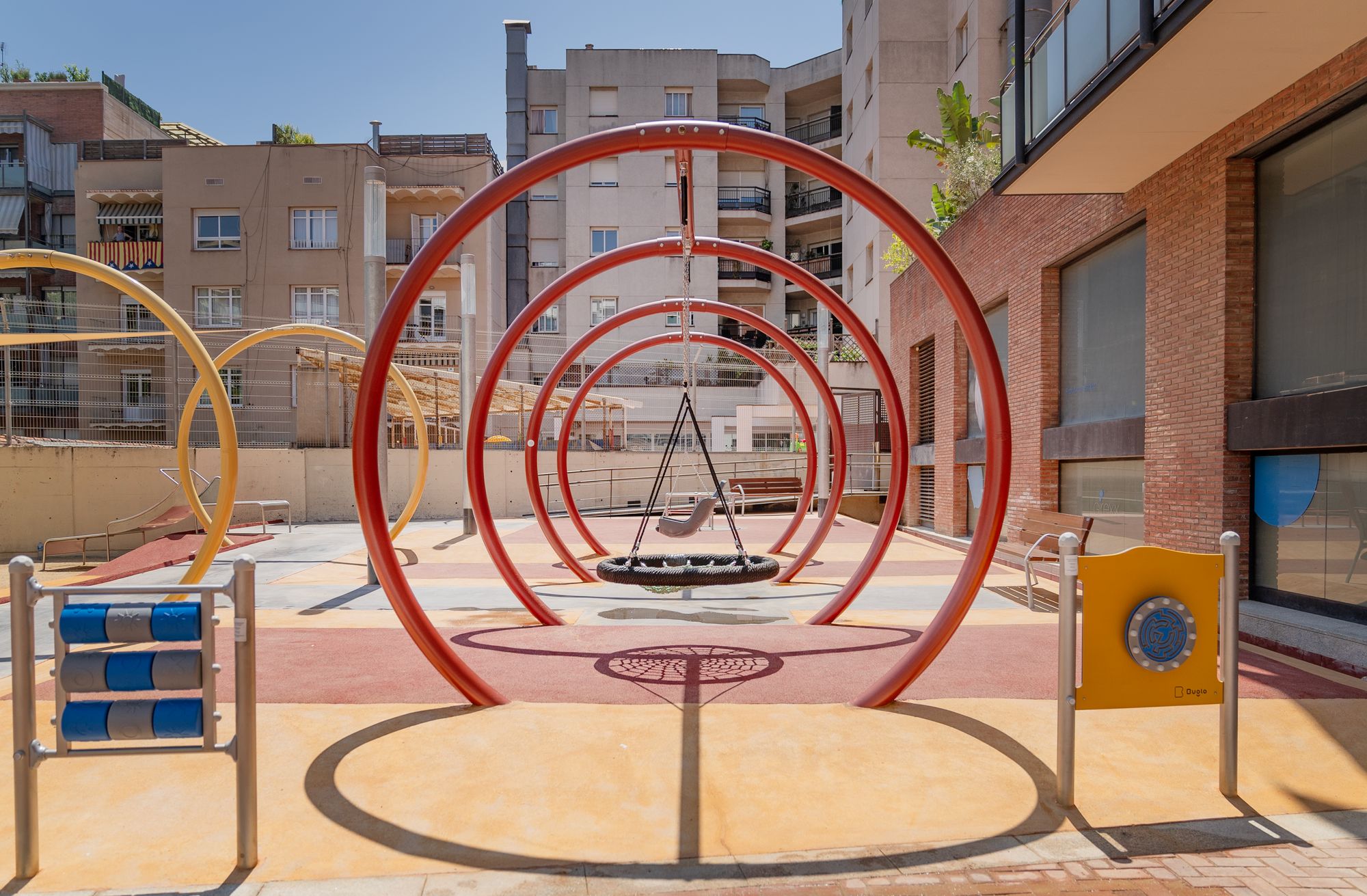
Barcelona also has accessible and inclusive play areas, designed so that all children, regardless of their abilities, can enjoy playing. 

These areas allow any child (with a disability or not) to enjoy outdoor play and ensure that they can experience, at the very least, the basic play activities: swinging, sliding, climbing and experimenting. 

In the case of fully accessible areas, all leisure activities have an appropriate accessible play area.

The play areas are structured into areas of quiet play and dynamic play so that all children can feel safe. Accessible routes are also created or safe areas are marked out to make the spaces more visible. 
CHECK OUT THE ACCESSIBLE PLAY AREAS

Image
Image
Image
Image

Barcelona, a play-friendly city

How do we guarantee play in public spaces?

In Barcelona we defend children's right to play in public spaces and we are working to create a playable city that encompasses streets, schools, parks and beaches. 

Therefore, urban planning is also designed to prioritise the well-being of the youngest children through children's play areas, the transformation of school playgrounds, improving safety in school environments, converting streets into pedestrian zones and harmonising nature with urban public space.

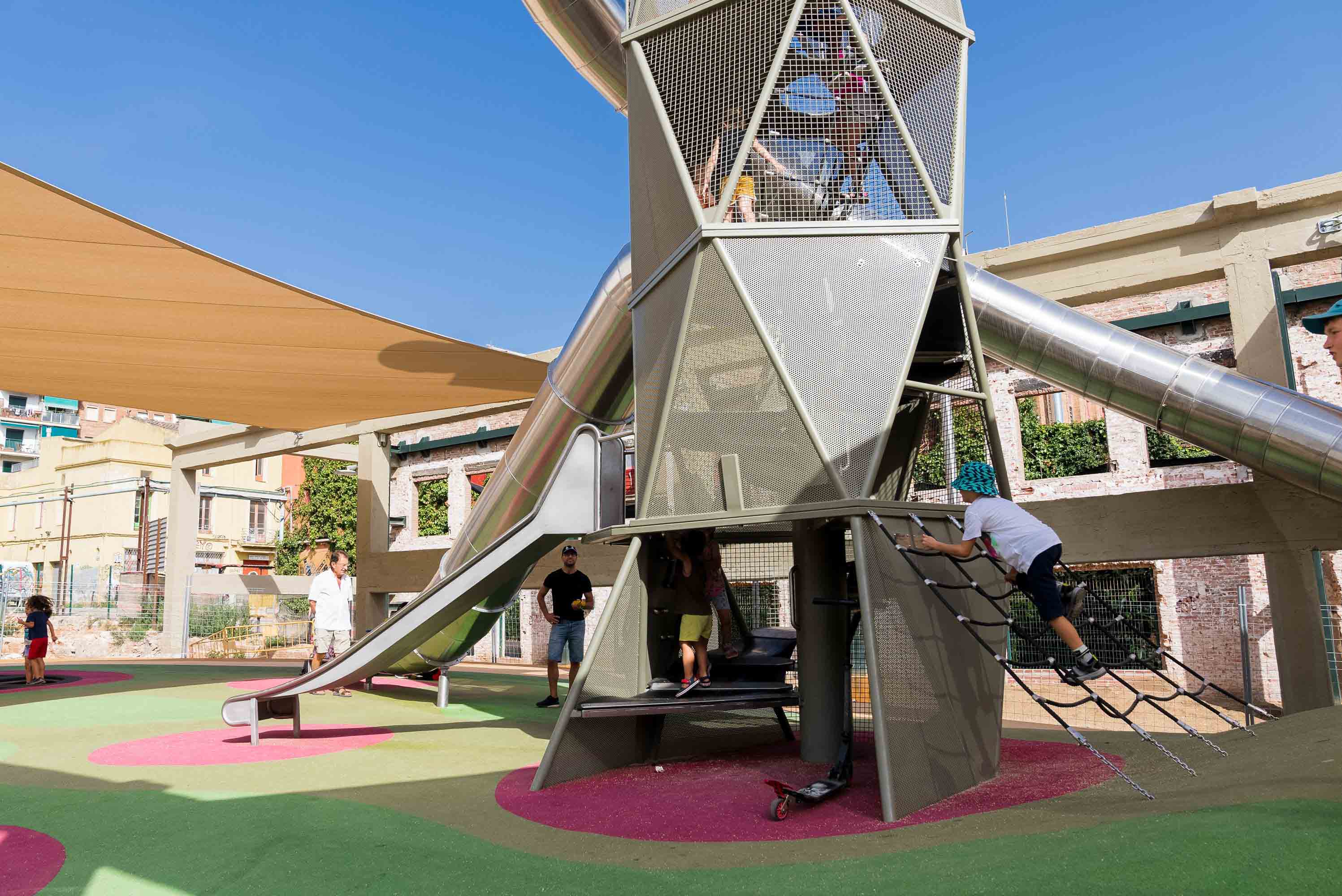
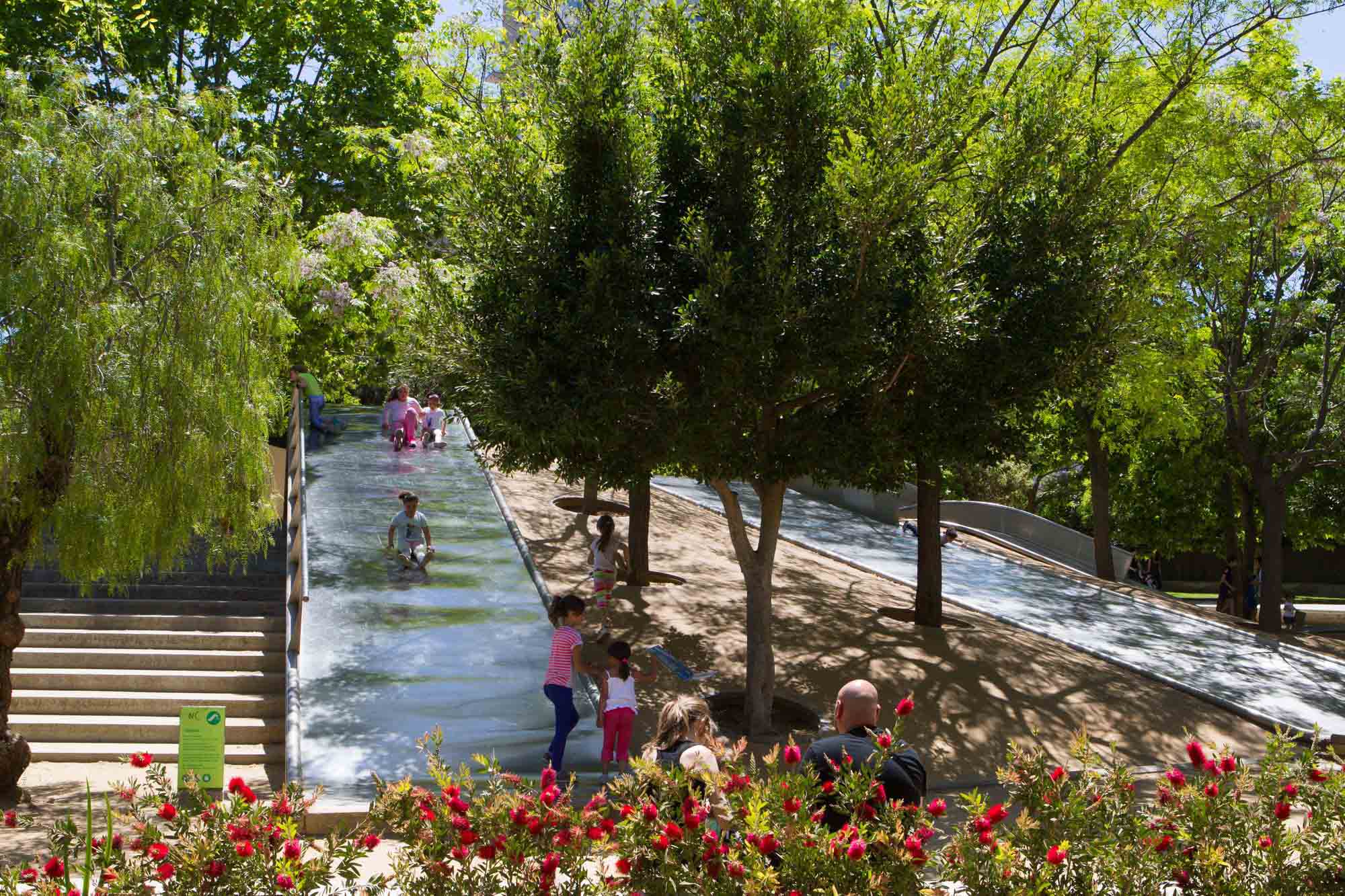
Super play areas

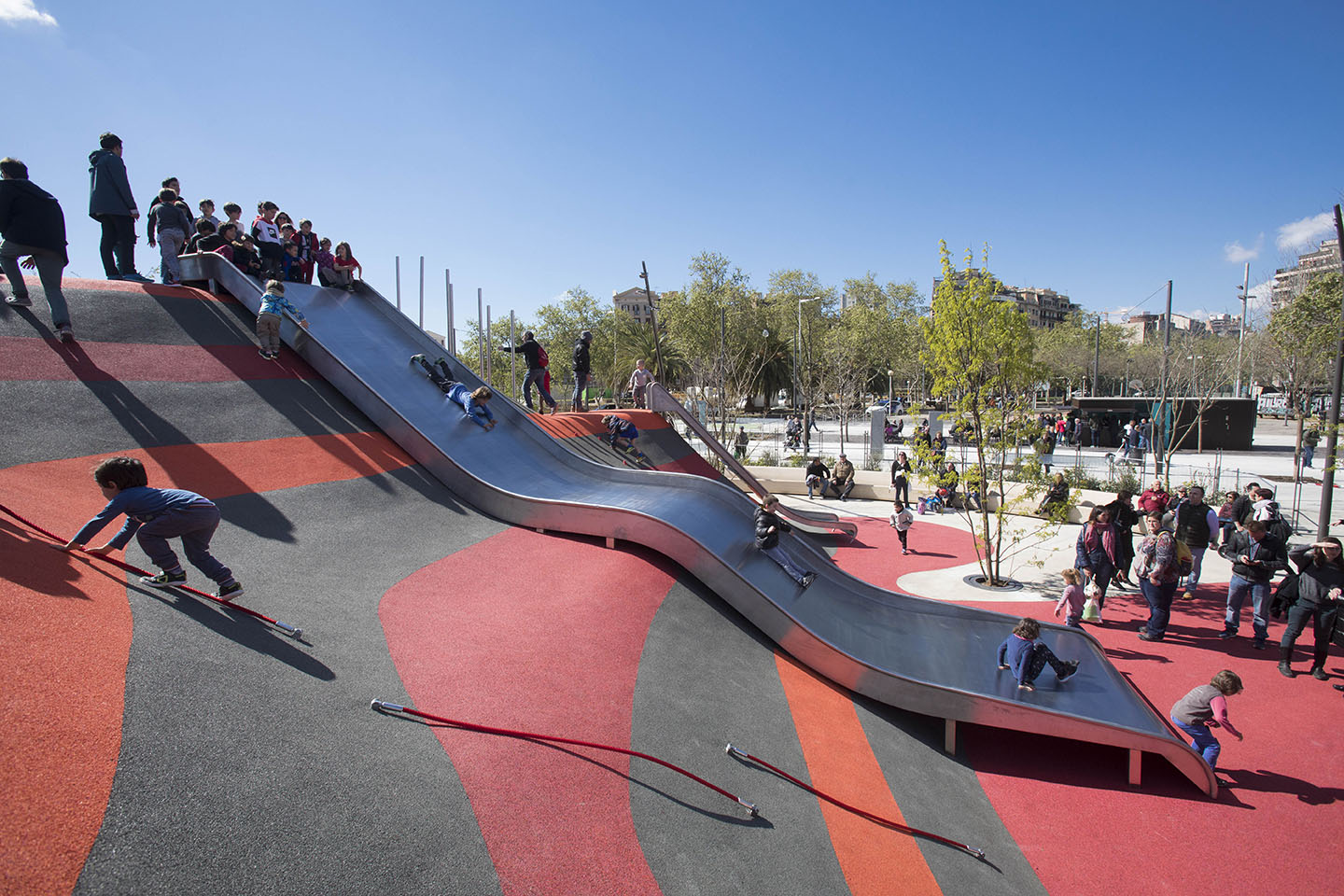
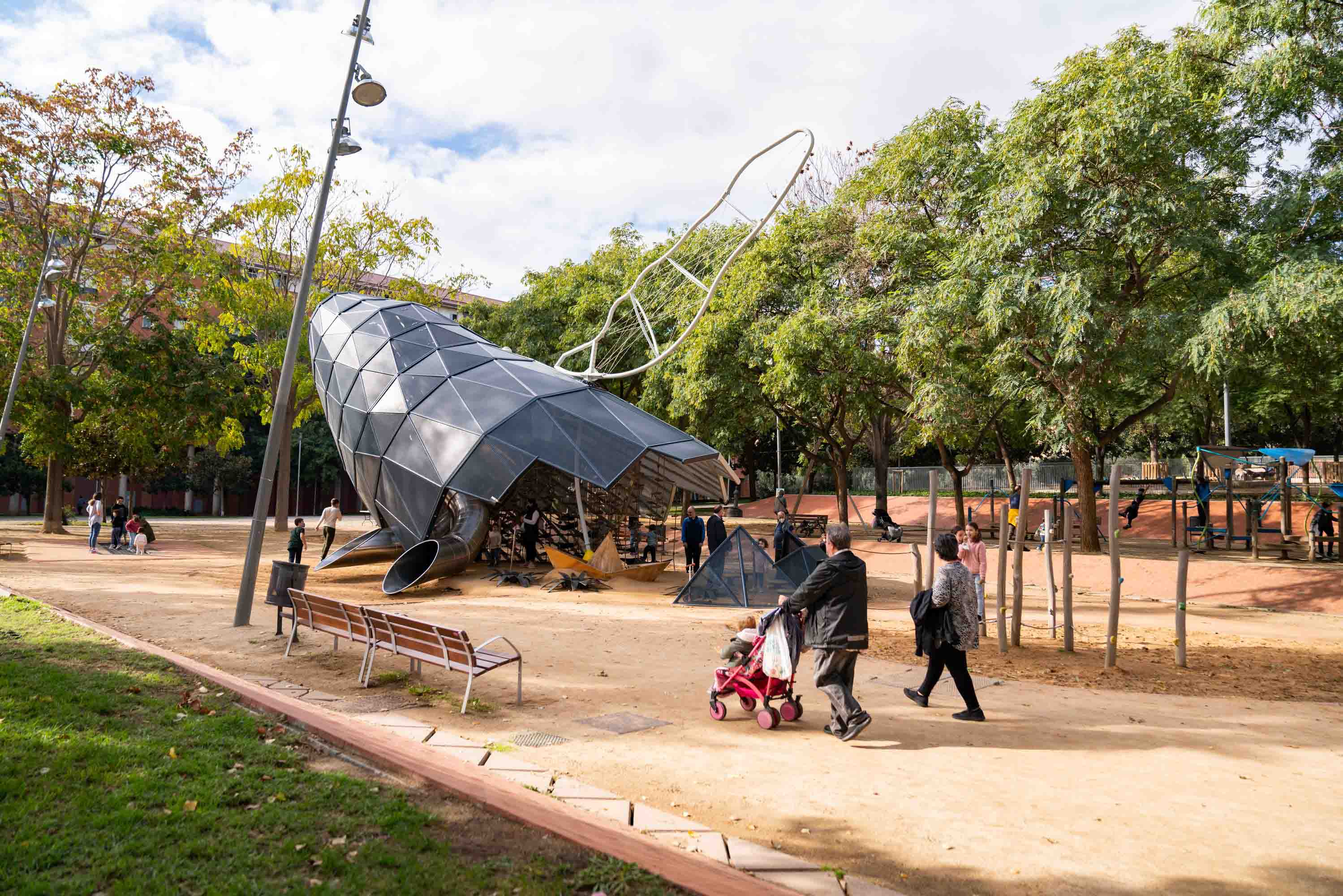
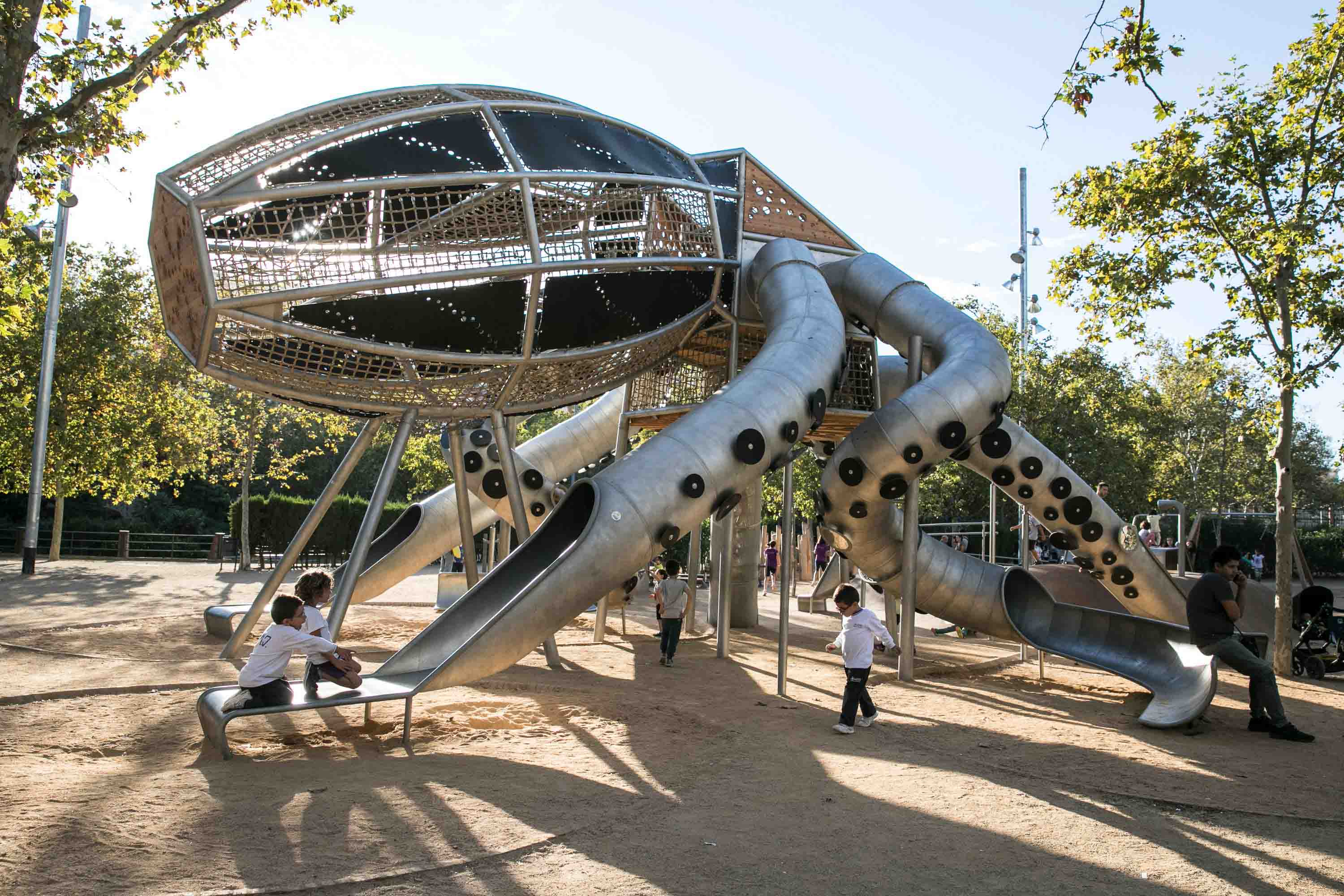
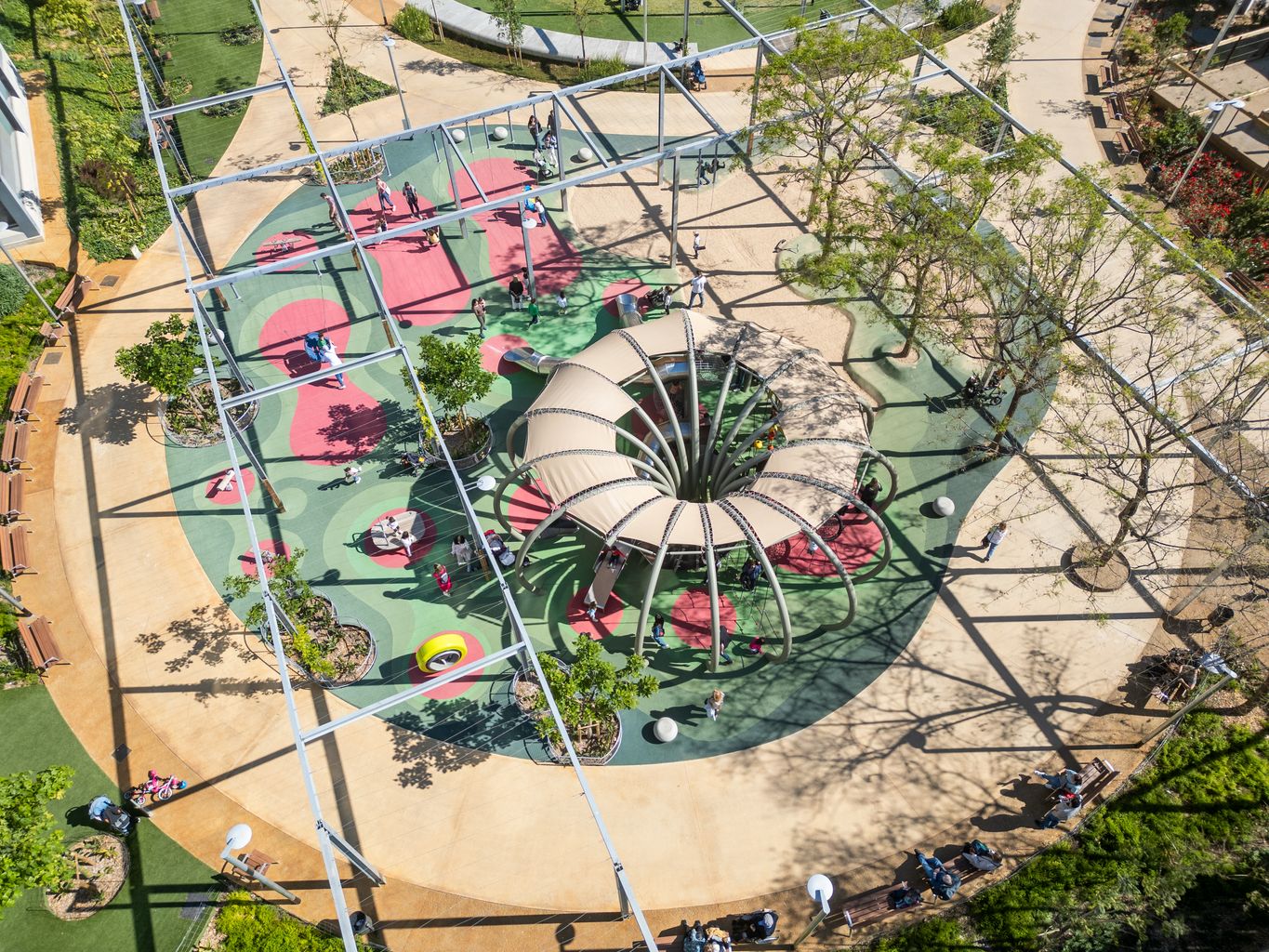
With almost a thousand public spaces dedicated to children's play, several super play areas stands out for the uniqueness of the facilities they contain.

You can view all the outstanding play areas of the playable city of Barcelona on this map (PDF). 

Image
Image
Image
Image

Safety and maintenance

Safety is a priority in the design of these spaces. All areas are certified annually in accordance with current safety regulations.

What do we do?

  • Preventive inspection to detect anomalies and defects (three times a week).
  • Corrective maintenance: immediate repair of any defects detected.
  • Airing and disinfection of sand pits with steam at 90º (every two months).
  • Functional inspection to ensure structural and functional safety (every three months).
  • Annual maintenance: the sand is replaced in 50% of the play areas and 40% of the children's playground elements are painted. 
  • Play in Public Spaces Plan 2030

Improving playgrounds

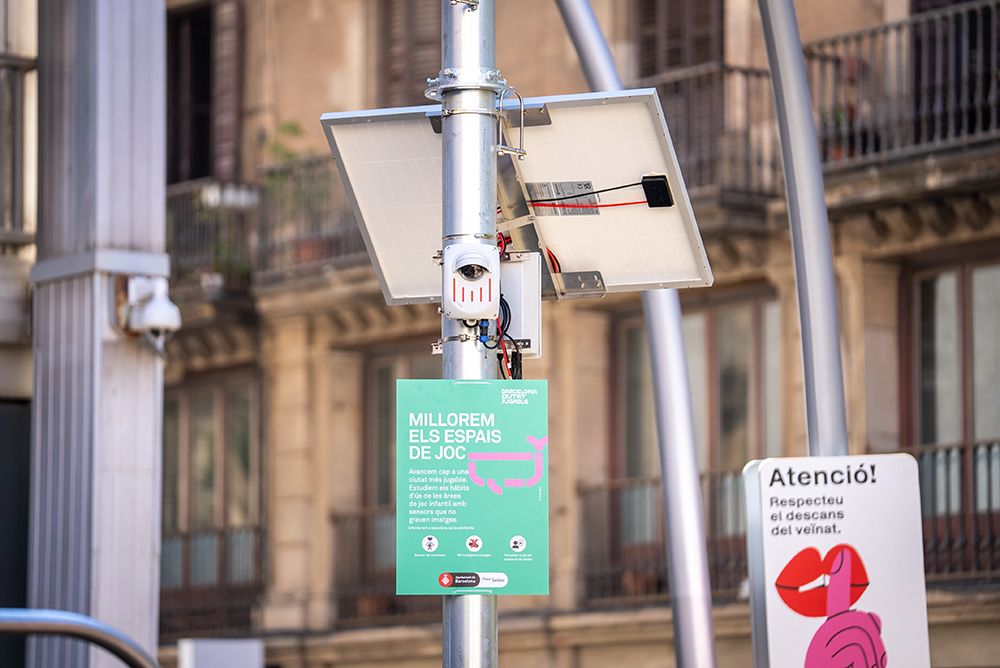
Volumetric sensors are being installed in various playgrounds to gather more information on how they are used and improve their design. There will be around twenty units in all, rotating through the various playgrounds in the city.
  • Learn more
Image
Barcelona City Council logo
  • Sitemap
  • Legal notice
  • Accessibility